
How I assess a used car
Used Car Buying Guide
When I assess a used car, I want its condition, mileage, history, interior wear, mechanical behaviour and overall presentation to make sense together. One odd detail doesn’t automatically put me off, but if several things don’t add up, that’s when I start looking much harder.
I don’t judge a used car on one thing — I build a picture of the whole car. It’s the approach I’ve used personally and throughout three decades working in the motor trade.
Owner count and seller context
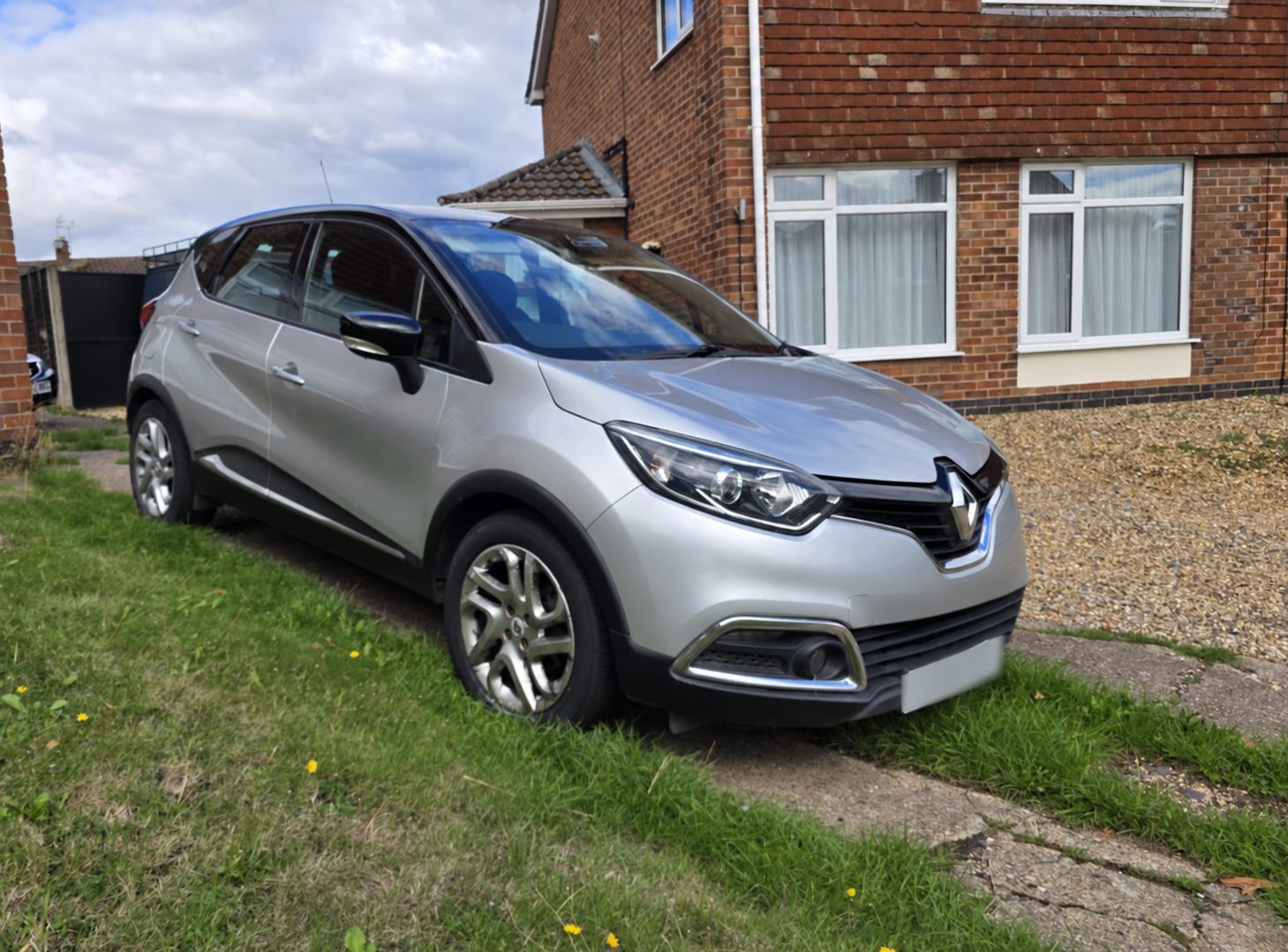
A low owner count can be attractive, but it isn’t a verdict on its own. One careful long-term owner is a good sign; several owners over many years can be completely normal. Dealer, pre-registration and company entries can also make a simple number look more dramatic than the real story.
What makes me ask more questions is a pattern of very short ownership, a seller who can’t explain the car’s recent history, or paperwork and condition that don’t support the advert. I’m always more interested in how the car has been looked after than in chasing a headline owner number.
Stand back and get an overall feel
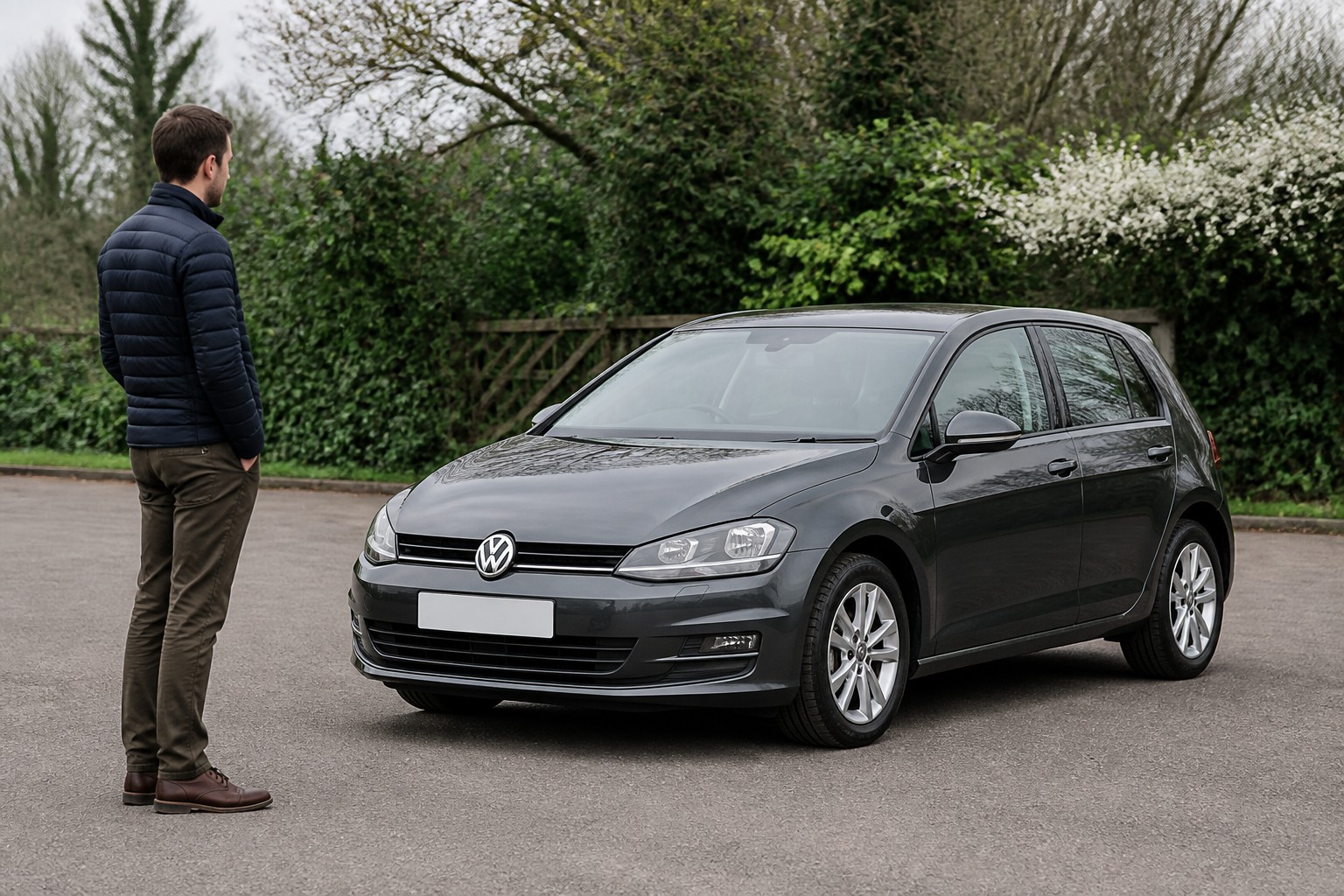
Before I open a door, check a tyre or start looking for individual marks, I like to stand a few metres away and take in the whole car. I’m looking at whether it sits right, whether the panels appear straight, whether the paint colours broadly match and whether anything immediately feels out of place.
I’m not trying to make a decision from thirty feet away. I’m giving myself a clean first impression before I get distracted by small details. A car can have a few chips and scratches yet still look honest and well cared for. Equally, a very shiny car can start to feel wrong once the stance, panel fit and overall story are considered together.
That first impression becomes the starting point. From there, I work around the car more than once and concentrate on a different group of details each time.
On a roughly £500 older car, a dent, faded trim or patchy history may be perfectly realistic. My priorities are whether it’s structurally sound, basically roadworthy, mechanically sensible and supported by an MOT record that makes sense. In the middle of the market I expect better history, better tyres, fewer faults and a stronger overall car. At £20,000–£100,000+, I expect the provenance, specification, ownership history, preparation and support to rise with the price.
First walk around — painted surfaces
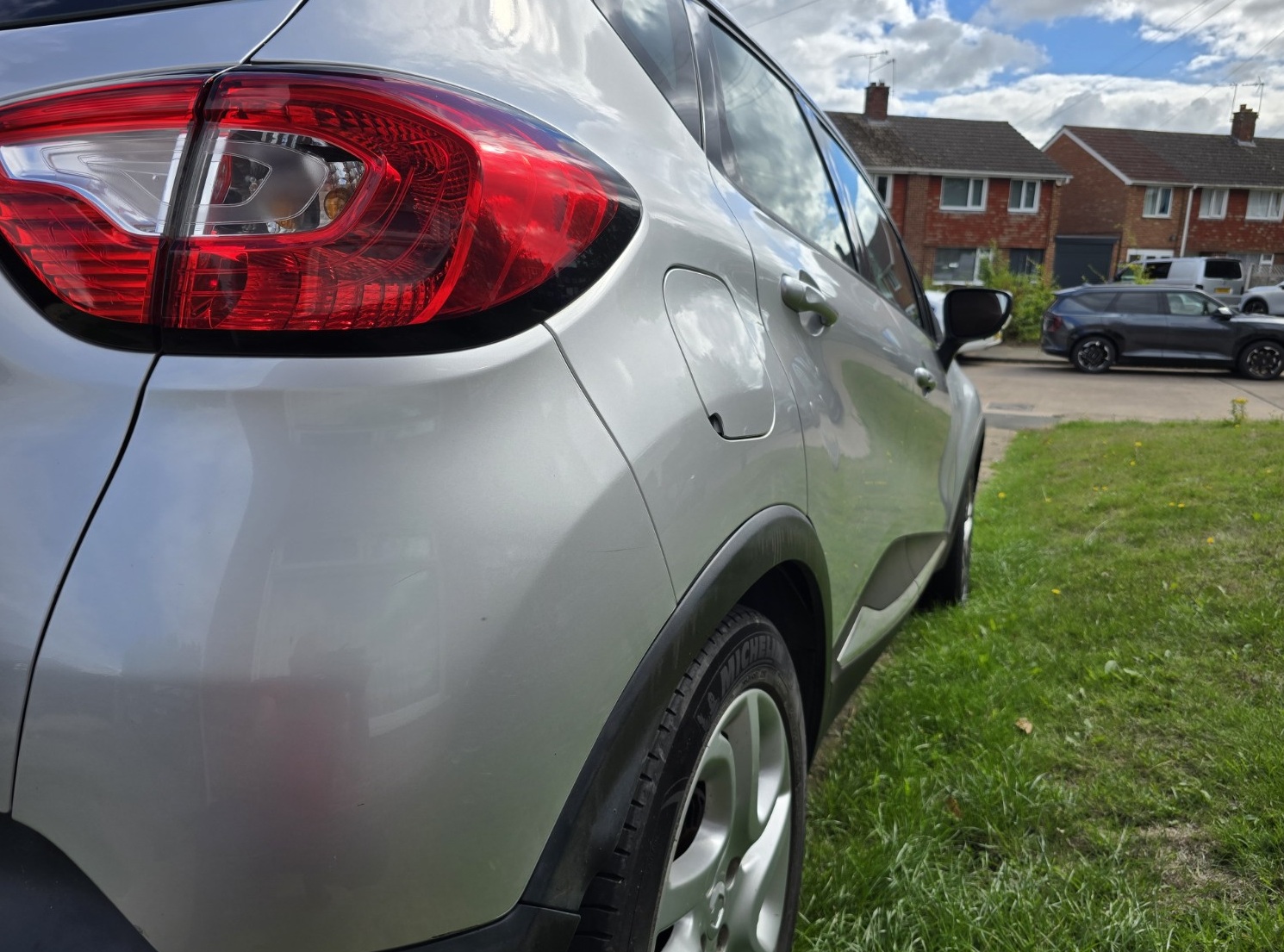
On my first proper pass I concentrate mainly on the painted surfaces. I’ll often walk slowly backwards around the car while looking down the sides of the panels. Changing the viewing angle makes changes in reflections much easier to see, and it helps me pick up pin dents, car-park dents, subtle ripples, previous paint and differences in gloss or finish.
Previous paint doesn’t automatically put me off. A door, wing, bumper or bumper corner might have been repainted because of a car-park dent, scuff, scratch or minor parking incident. What matters is why it was painted, whether it was done properly and whether there are other signs suggesting something more serious.
Context matters here too. I’ll forgive ordinary cosmetic imperfections on a cheap older car if the important structure and mechanical condition are right. On a high-value car, I want a much clearer explanation of previous paint or accident work, much better workmanship and evidence that its condition justifies the money.
The genuine Real-World Transformations show the same distinction in practice: sensible preparation can make an older car more presentable, but it doesn’t erase the need to judge the whole car, its repair quality and the evidence honestly.
I look for poor panel gaps, broken bumper clips, overspray, sanding marks beneath the clear coat, unusual orange peel and poor colour match. Previous paint isn’t the red flag by itself — poor repairs or a story that doesn’t add up are. The deeper previous accident-damage guide explains those clues in more detail.
A heavily stone-chipped bonnet on a supposed 50,000-mile car would catch my attention, but I wouldn’t instantly conclude the mileage was wrong. Road type, use and previous ownership make a huge difference. I’d simply ask whether the interior, history and rest of the car support the mileage being claimed.
Second walk around — lights, glass, trim and gaps
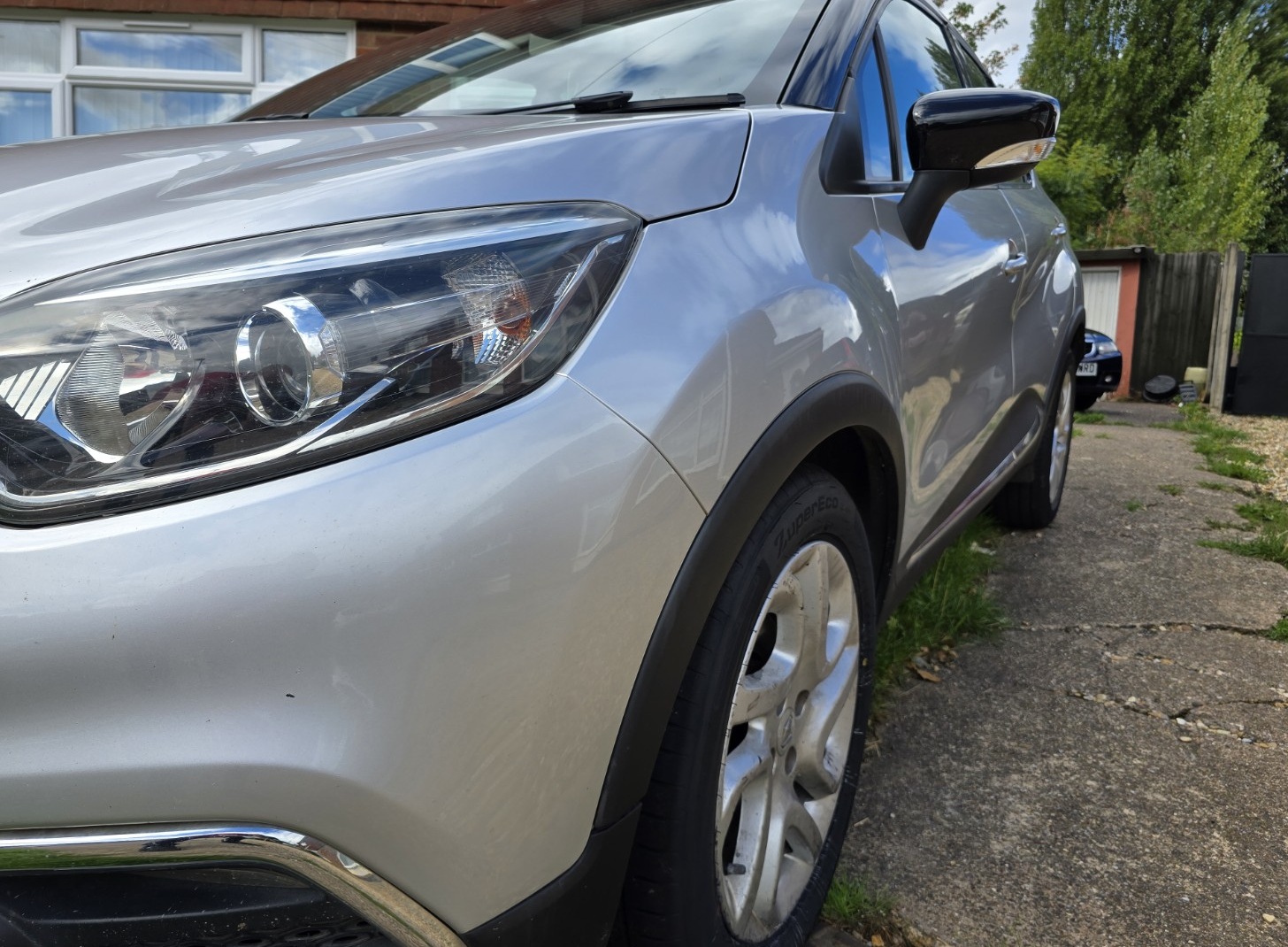
On the second pass I look more closely at the headlights, rear lights, windscreen, other glass, trims, panel gaps and window rubbers. I’m checking for cracks, chips, condensation, damaged clips, poor fit and overspray tucked into places that were missed during masking.
I also take a first look at all four tyres from here — whether they appear matched, how much tread is visible and whether one corner looks obviously different. I come back to them properly on the next pass rather than trying to assess everything at once.
A replaced lamp or piece of glass doesn’t prove the car has had a serious accident. Parts get damaged and replaced for perfectly ordinary reasons. As always, I’m interested in whether the detail fits the wider story.
Windscreen damage can be more expensive than many buyers expect on a newer car. Cameras, sensors and driver-assistance systems may be mounted around the screen, and replacement can require recalibration. On some cars the complete job can run into four figures, so I won’t dismiss a chip or crack without checking what’s fitted and what a proper replacement would involve.
Tyre depth, condition and age
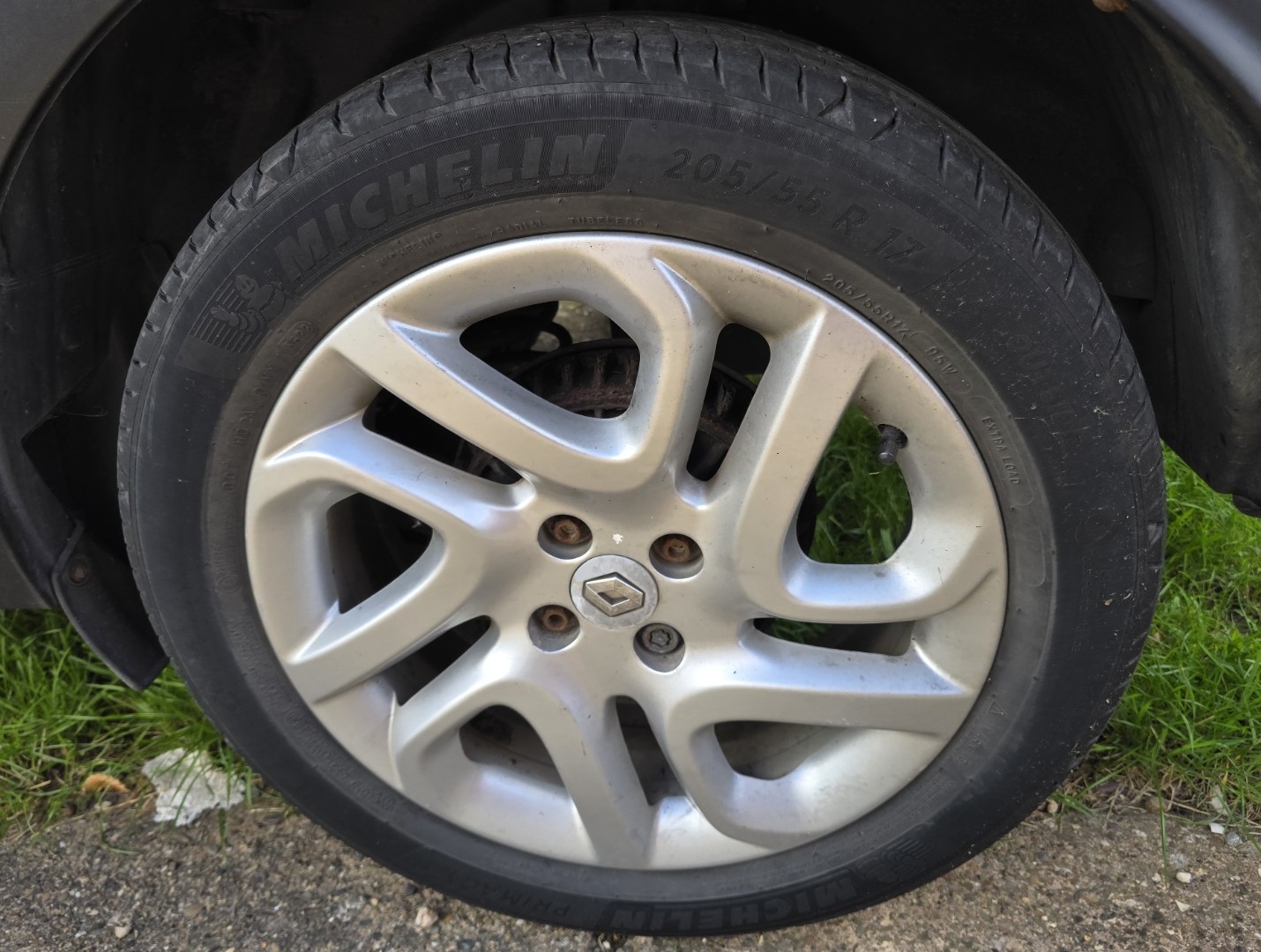
I don’t just glance at the visible outer edge. On the front tyres I turn the steering onto full lock so I can inspect the full width of the tread, including both inner and outer shoulders. What I want to see is reasonably even wear rather than one edge disappearing while the rest still looks healthy.
For rear tyres, I may need to crouch down and physically inspect or carefully feel the inner edge. Uneven wear can suggest an alignment or suspension issue, although it doesn’t diagnose the cause by itself.
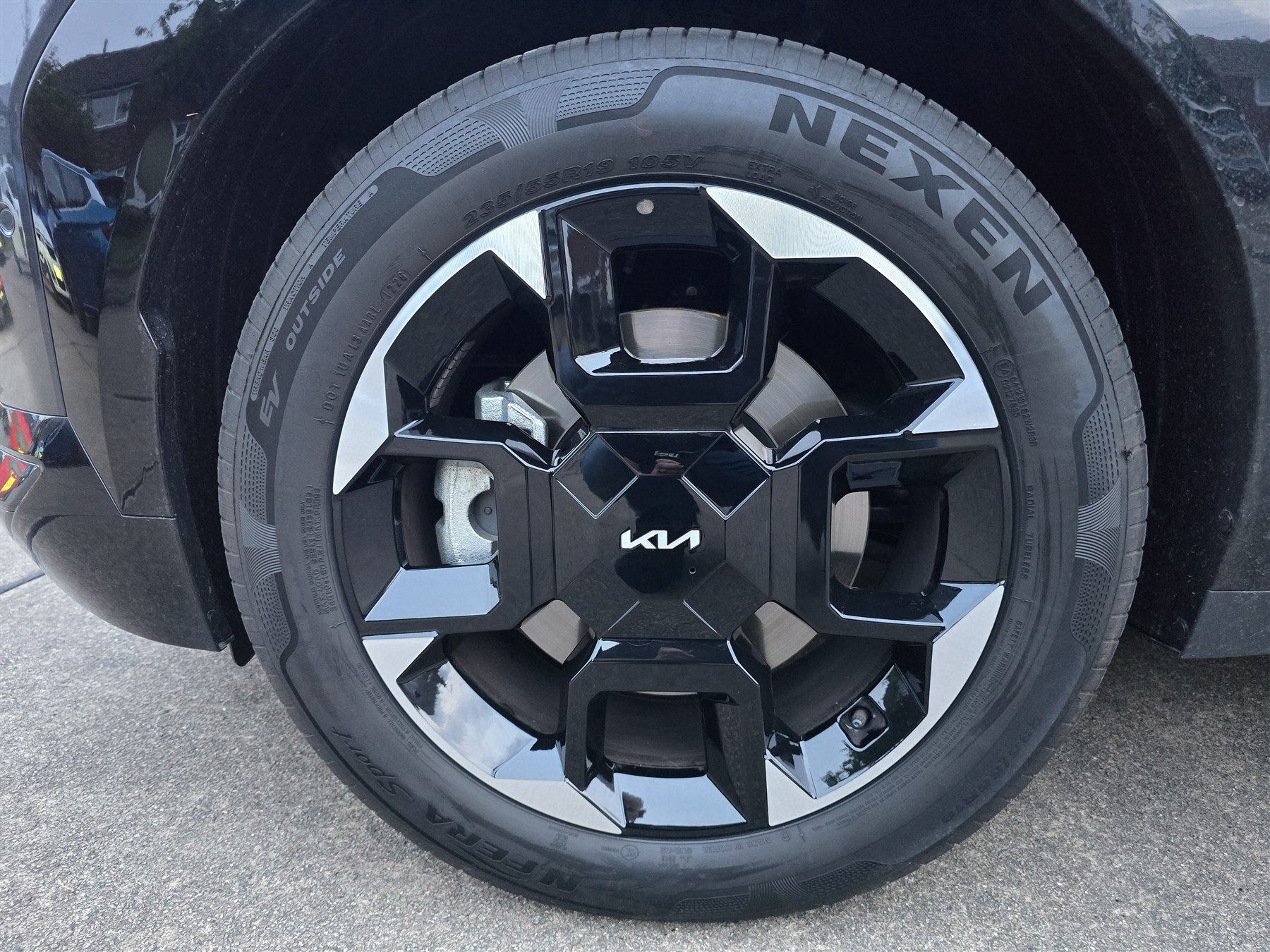
The UK legal minimum for most car tyres is 1.6mm across the central three-quarters of the tread and around the full circumference. Personally, I don’t like seeing tyres run right down to the absolute minimum. Around 3mm or more gives a much healthier amount of usable tread, and many manufacturer-approved used-car programmes I’ve worked with have prepared cars around a 3mm standard. That doesn’t mean every dealer follows the same policy.
I check condition as well as depth: cracking, perishing, bulges, cuts and chunks missing from the sidewall all matter. Rubber hardens and deteriorates as it ages, so a tyre can have plenty of tread yet still be old enough that replacement should be considered.
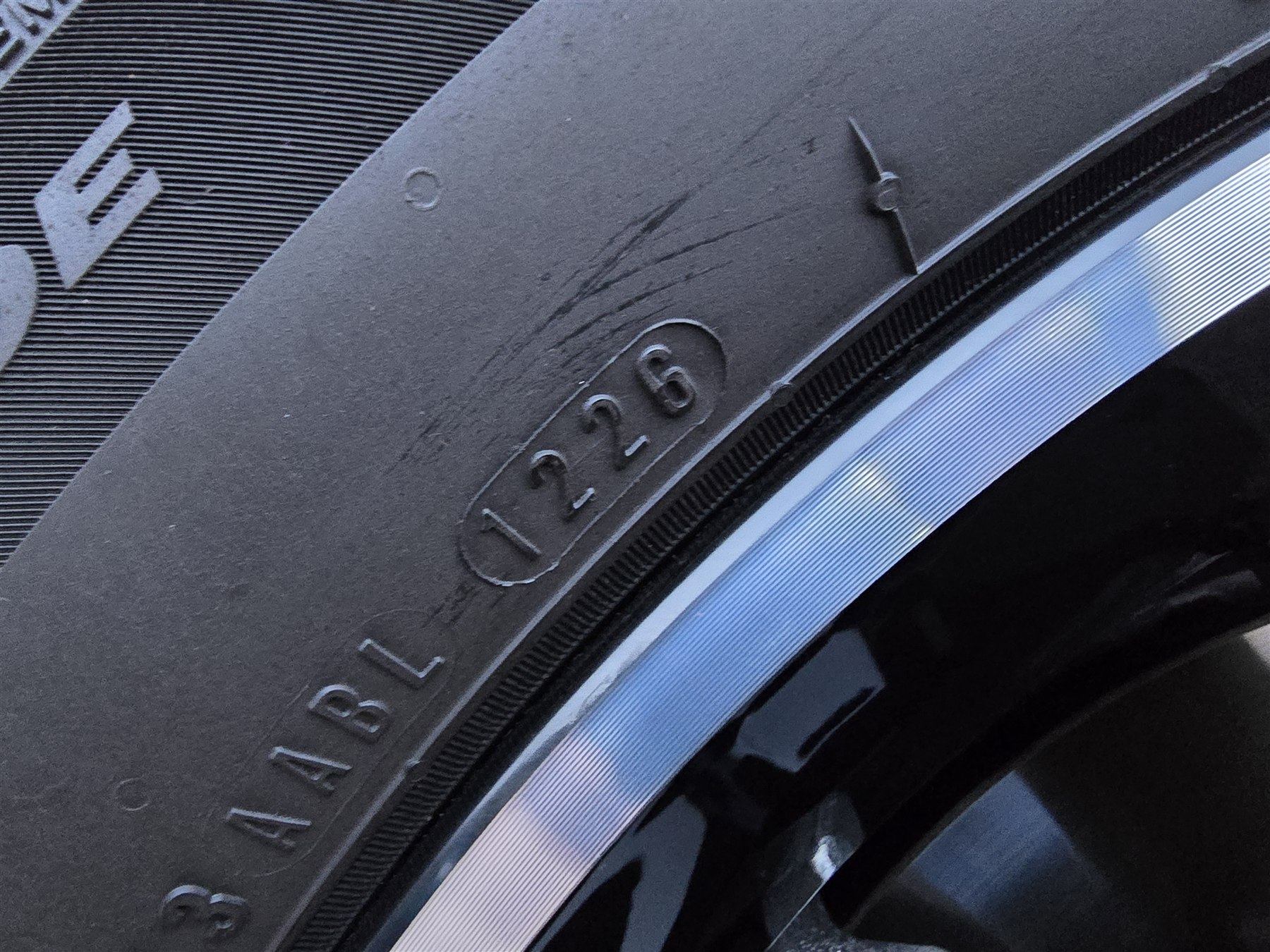
The four-digit code on the sidewall tells you when the tyre was manufactured, not the exact date it was fitted. Use it alongside the tyre’s present condition and the car’s wider maintenance story. There’s more detail in How Much Tyre Tread Should a Used Car Have?
A usable low-cost car doesn’t need four premium tyres with nearly new tread, but they must still be legal and safe. As the price rises, I expect a better-matched set, healthier tread and tyre choice that makes sense for the performance and value of the car. Cheap, mismatched or nearly worn-out tyres on an expensive car tell me something about its preparation and possibly its previous care.
Interior wear versus mileage
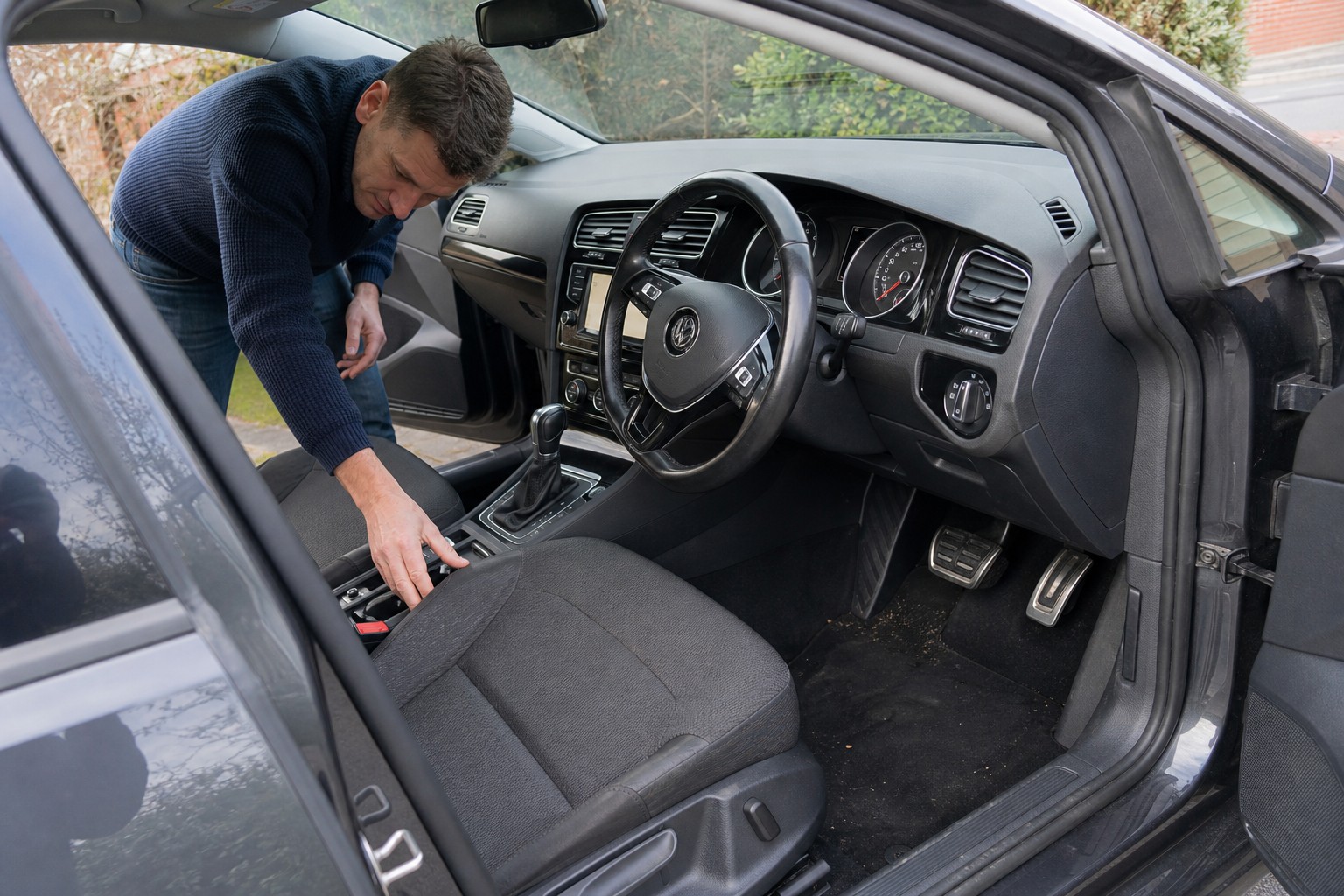
Once I’m inside, I’m still asking the same question: does the story make sense? I look at the pedal rubbers, steering wheel, gear knob, gear gaiter and driver’s seat bolster because those are the places that often show how a car has actually been used.
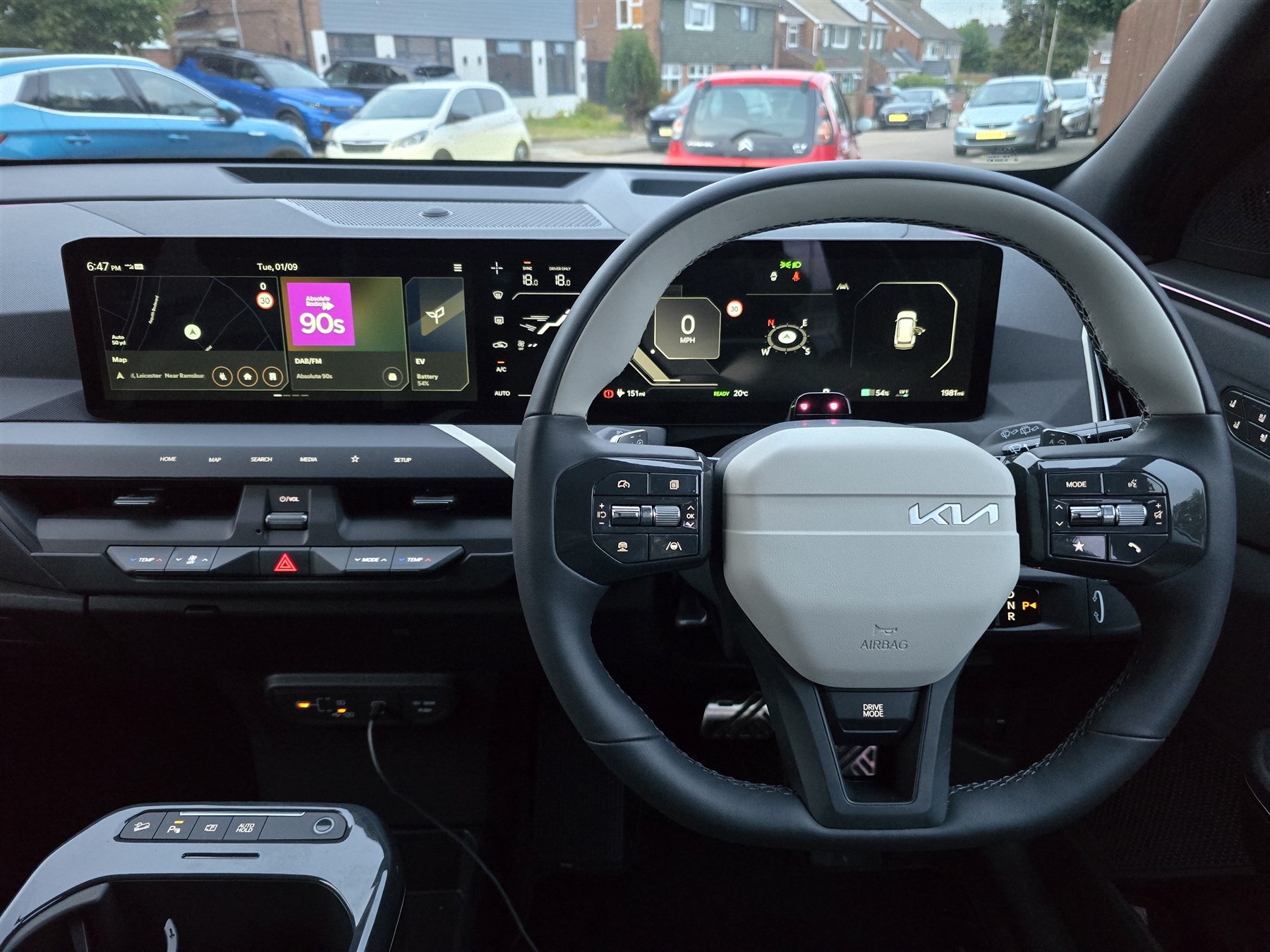
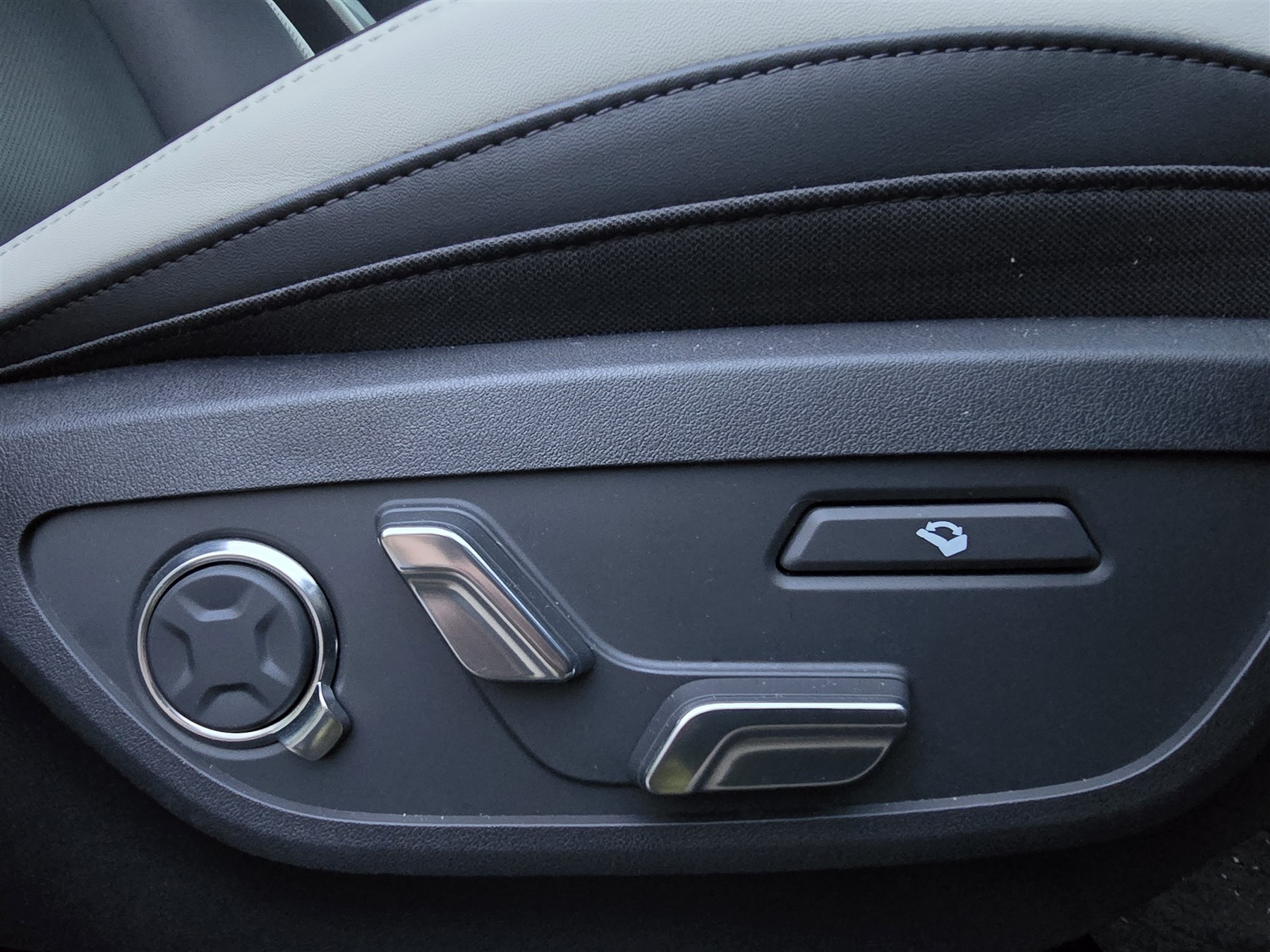
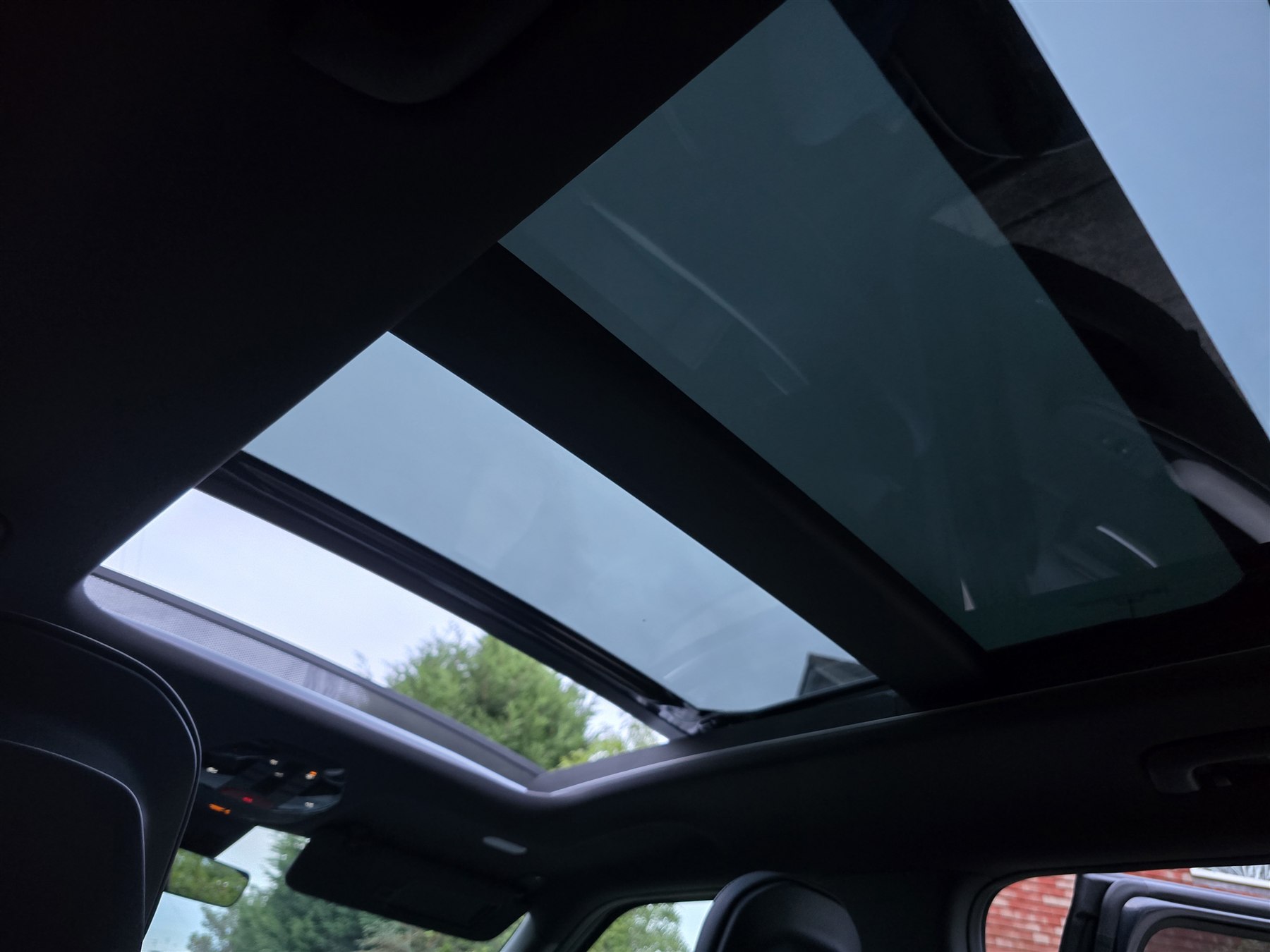
If a supposed 40,000-mile car has pedal rubbers that look destroyed, I’ll notice it. If a 50,000- or 60,000-mile car has a ruined steering wheel, gear knob and heavily worn bolster, I’ll ask why. Equally, I’ve seen 150,000-mile cars wear exceptionally well because of the type of journeys they’ve done and the care they’ve received.
None of those clues proves mileage tampering by itself. They’re simply parts of the overall picture, to be compared with the MOT mileage, service evidence, condition and seller’s explanation.
Engine bay and cold start
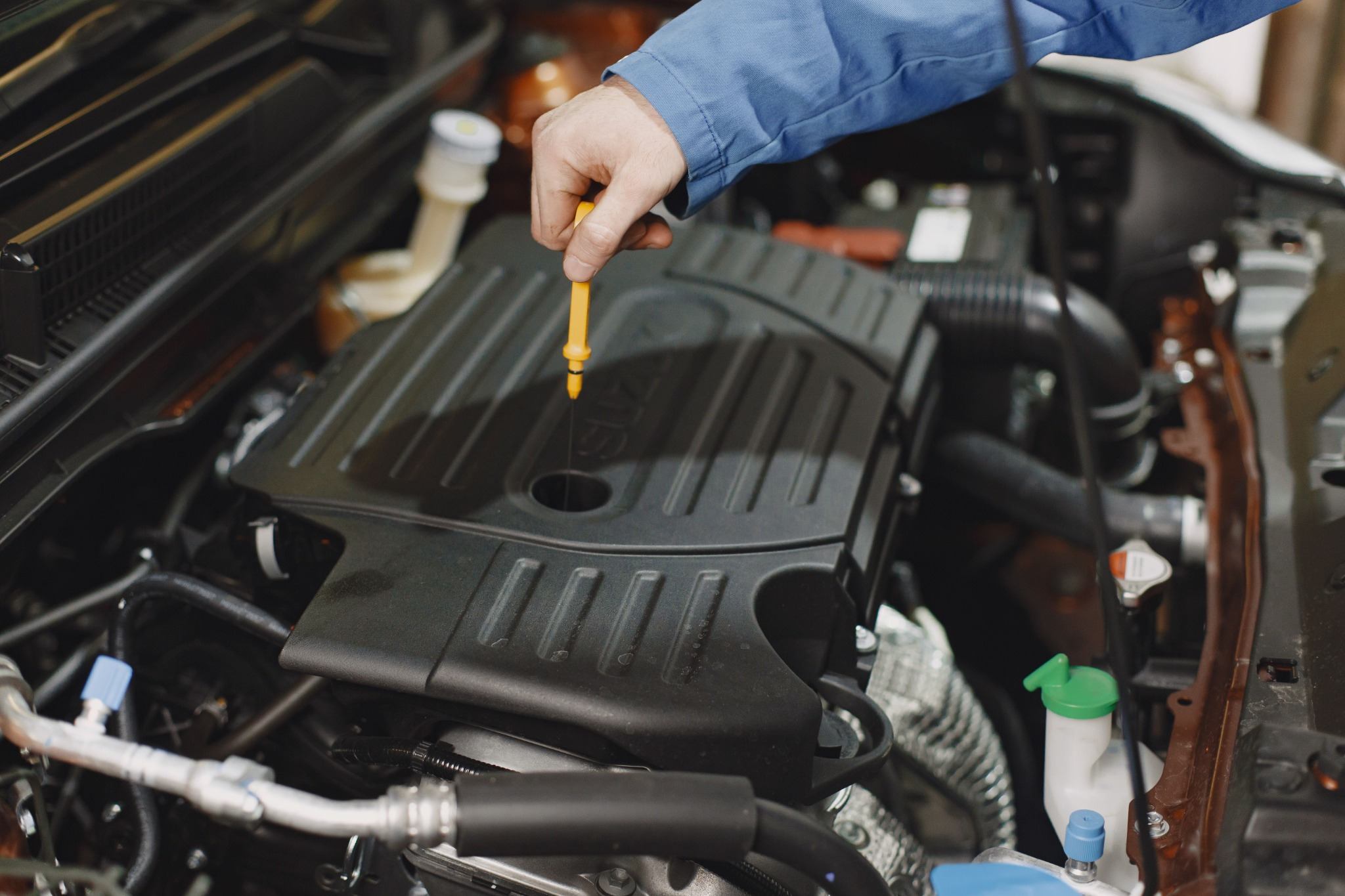
Ideally, I don’t want the seller to start the car before I arrive. Some noises are much more obvious when an engine is genuinely cold, and a warm engine removes one useful part of the appraisal.
Before starting it, I check the engine oil level using the correct vehicle procedure. Where there’s a conventional dipstick, I pull it out, wipe it, dip it again and confirm the oil sits comfortably between minimum and maximum. I normally check it twice. An electronic oil-level system needs to be checked as the handbook describes.
Then I start the car and listen. I’m not a qualified mechanic, so I’m not pretending every noise lets me diagnose a fault. But after years around cars, if something doesn’t sound right, I take notice and either investigate it properly or arrange a professional opinion.
Once the engine has run for a few minutes, I may give it a sensible rev — not take it anywhere near the rev limiter — and look for excessive smoke. Blue smoke can indicate oil being burned. Thick, persistent white smoke once the engine is warm can indicate coolant entering the combustion process. Black smoke, particularly on an older diesel, can point towards fuelling or incomplete combustion. Normal condensation on a cold day shouldn’t be confused with persistent white smoke.
Afterwards, I want the engine speed to settle into a stable idle. Hunting means the engine speed repeatedly rises and falls without the accelerator being touched. Sometimes the cause is relatively simple and sometimes it’s more involved, but either way it’s something I’d investigate.
Under the bonnet, I’m looking for obvious leaks, damaged or missing covers, messy repairs, poor battery condition and signs that routine care has been missed. I don’t pretend an untrained buyer can diagnose an engine by looking at it, and I never open a hot or pressurised cooling system. If something looks wrong, it’s a reason to ask, investigate or bring in a competent professional.
Cambelt, timing chain or wet belt
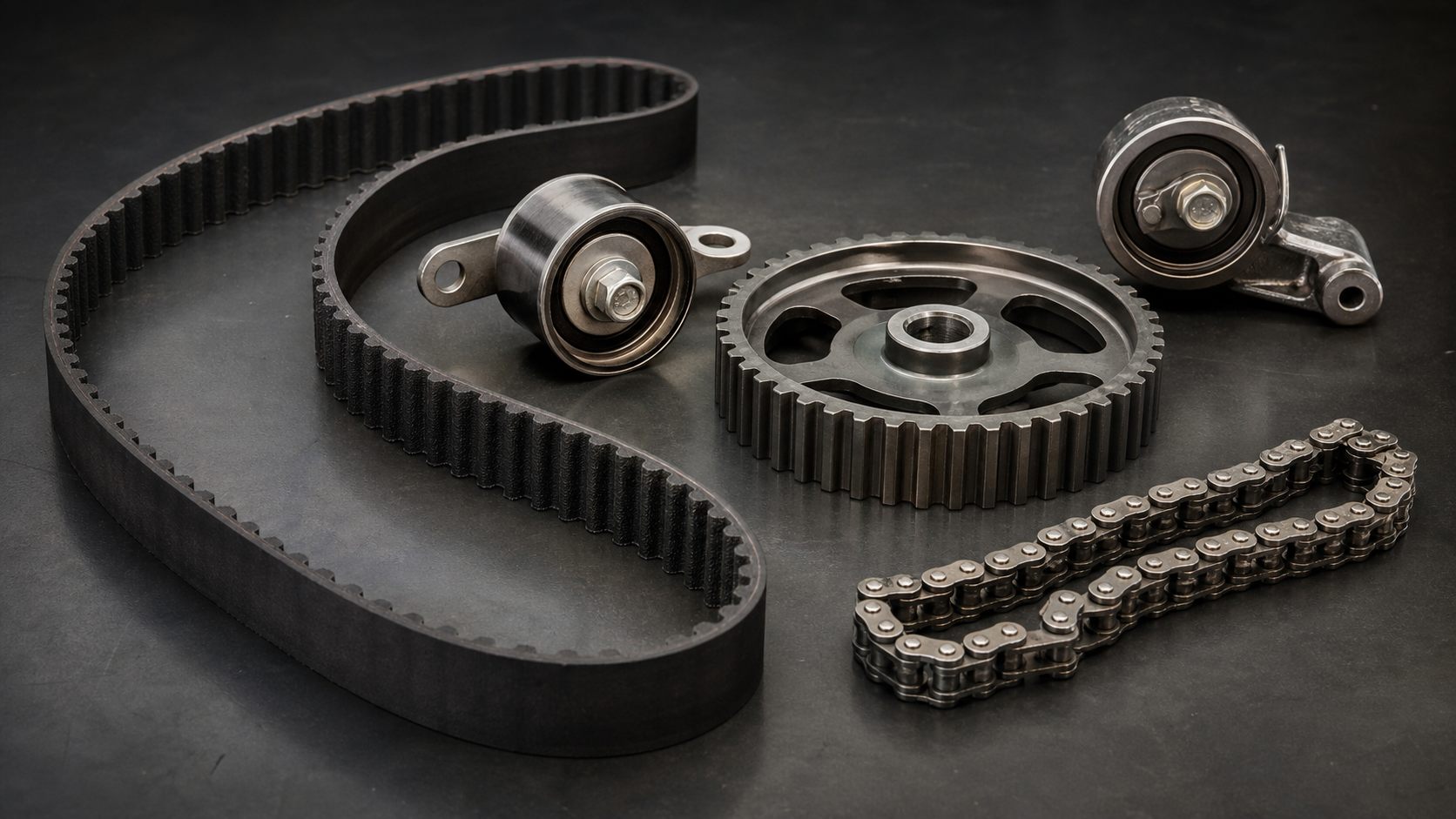
I want to know which system the exact engine uses and what maintenance it requires. A conventional cambelt has an engine-specific replacement interval, so I check that interval, establish when the belt was last changed and look for proof. Ideally that means an invoice, proper service record or clear documentary evidence — not simply somebody saying, “Yeah, the cambelt’s been done.”
Where the recommended job includes tensioners, idlers or a water pump, I want to know whether those were replaced too. On very old cars, such as my old Mk2 Scirocco, a belt could sometimes be physically inspected by removing a simple cover. Modern cars often leave me relying much more heavily on documentary evidence.
Timing chains are generally designed for long service life and often don’t have the same fixed replacement interval as a conventional belt. That doesn’t make them guaranteed for life. Chain stretch, tensioners, guides and lubrication can all cause problems, and many engines use plastic guide components that can deteriorate. I listen for unusual rattling, especially at cold start, and look closely at the oil and service history.
I don’t personally buy wet-belt cars for stock, and I wouldn’t buy one for my wife or recommend one to a family member. That’s my own experience-led risk tolerance; it doesn’t mean every wet-belt engine is automatically going to fail.
A wet belt runs in engine oil, so the correct oil specification and servicing matter. Deterioration can allow belt material into the oil system and potentially lead to much larger problems. If somebody is considering one, I’d check the exact replacement interval, correct servicing, oil specification, whether it has already been replaced and the documentary evidence.
Know what’s fitted, know what maintenance it needs, and don’t just take somebody’s word for it. The cambelt, timing-chain and wet-belt guide goes deeper.
The test drive

I use enough varied road to let the car warm through and reveal how it behaves. On a manual car I want smooth clutch engagement, no serious judder when pulling away, no unusually high biting point, smooth gear changes and no crunching into gears.
In my experience, clutch judder can point towards clutch or flywheel issues, while a very high biting point can be a warning sign of clutch wear. Crunching into second or third can sometimes indicate synchro wear. Those observations aren’t definitive diagnoses, but if a car had obvious gearbox crunching, personally I’d leave it rather than deliberately buy myself that hassle.
I also check visibility, driving position, controls, road noise and whether the car actually suits the journeys it’ll be used for. The dedicated used-car test-drive guide covers the process in more depth.
Brakes, steering and suspension
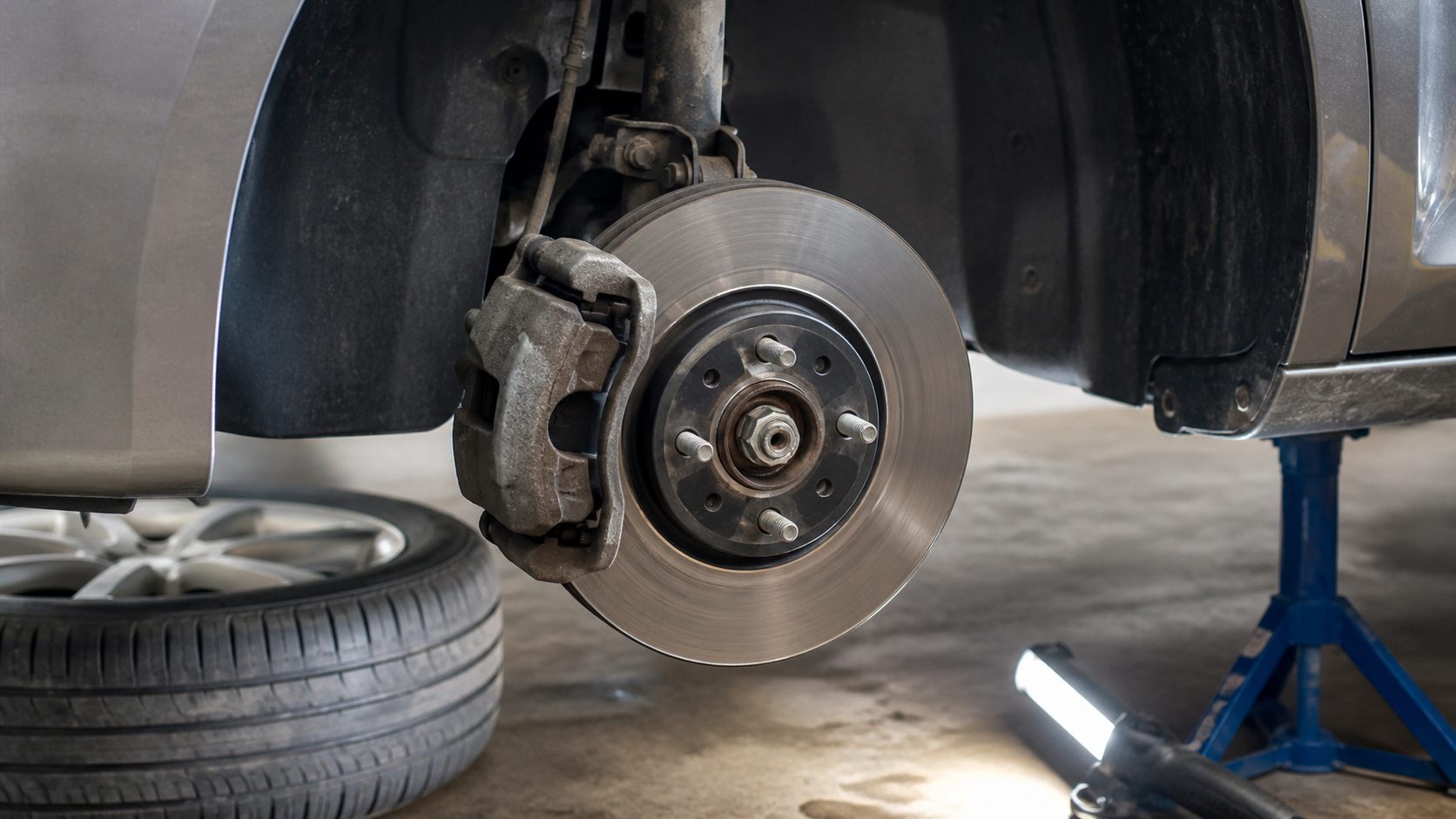
Braking should feel progressive and the car should stop in a straight line without a strong pull to one side. I don’t want serious steering-wheel or pedal judder. Judder can be associated with brake-disc issues or disc-thickness variation and may mean the discs and pads need attention. If discs are replaced, pads are normally replaced as part of the job.
While driving, the car should track reasonably straight rather than needing a constant correction. I listen over bumps for knocks and rattles that may be suspension-related. Drop links, ball joints and bushes are possibilities I’ve encountered, but a noise needs proper investigation rather than an automatic parts diagnosis.
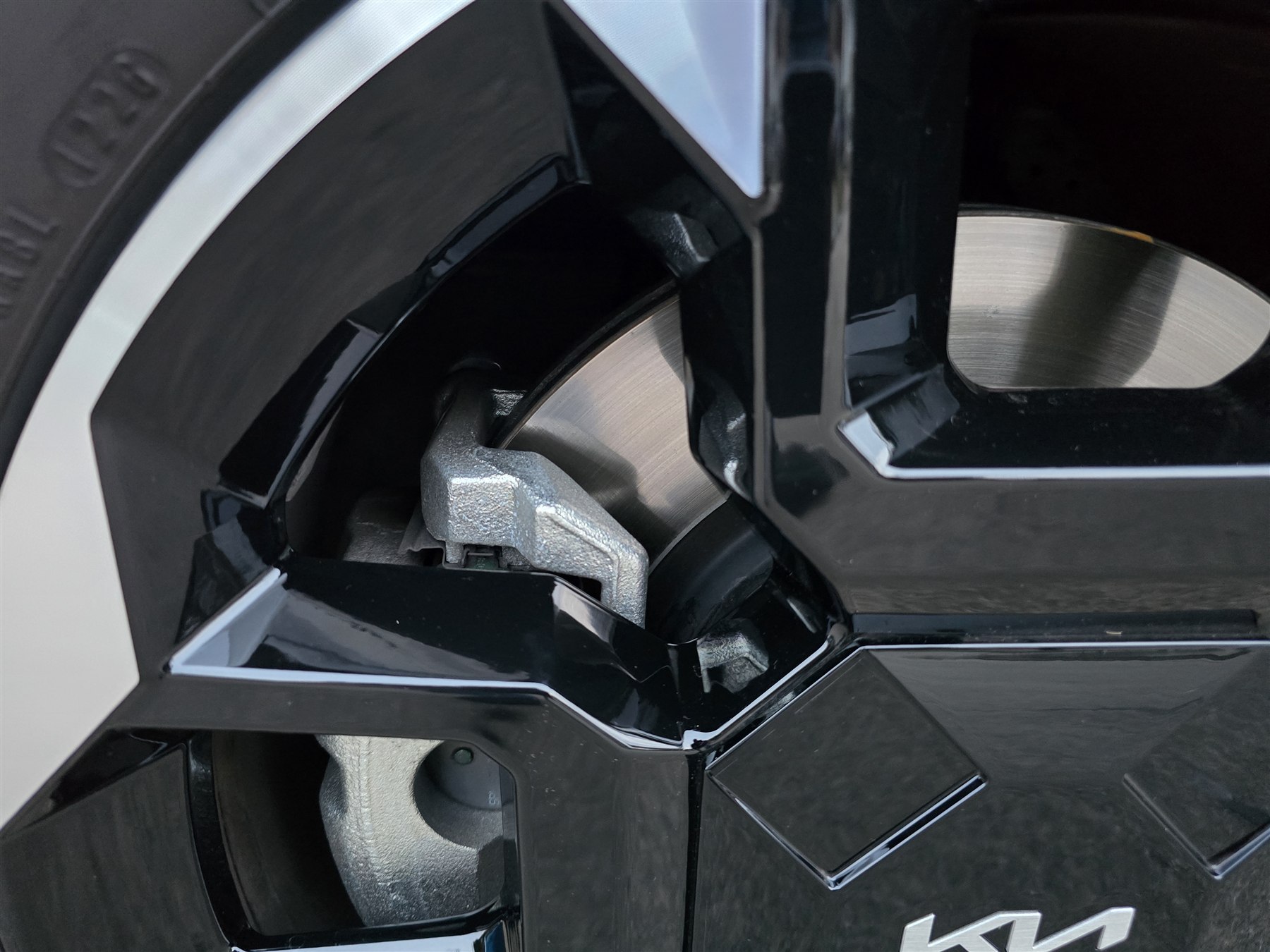
When the wheel design allows, I also look through the spokes at the visible discs and pads. A little orange surface rust after a car has stood is normal; a heavy lip, deep scoring, persistent corrosion, warning lights or a brake that feels wrong deserves a proper explanation. I don’t carry out unsafe roadside checks—if the condition is unclear, I’d arrange a competent inspection.
The main feeling I’m looking for is simple: a nice car should feel tight and composed.
Diagnostics: useful evidence, not a verdict
An OBD scan can be useful on the right car. It may reveal stored faults, warning-light issues, historic emissions-related codes or a reason to ask a better question. It’s one evidence source, though, not a substitute for an inspection, test drive and a history that makes sense.
No codes doesn’t prove a car is fault-free, and a code on its own doesn’t tell you the repair. Some systems need manufacturer-level diagnostics and proper interpretation. If the car is expensive, technically complex or showing unexplained symptoms, I’d rather pay for a competent assessment than let a cheap scanner make the decision for me.
MOT history
I check the MOT history before I travel to view a car. Always have done, always will do. I’m looking for patterns rather than simply the latest pass or fail: mileage progression, repeated advisories, how quickly failures were addressed and whether the record supports the car in front of me.
Anything suggesting structural body corrosion makes me extremely cautious. Personally, if I see structural corrosion advisories, I normally walk away. That’s my own buying policy, not a universal rule. I distinguish structural body corrosion from corrosion affecting replaceable bolt-on parts, such as some exhaust components or subframes, because the implications can be very different.
Use the How I Read and Interpret a Car’s MOT History guide and, where relevant, the guide to buying a car with MOT advisories.
Service history

Service history needs to make sense for the age, mileage, value and type of car — it doesn’t necessarily need to be perfect. A ten-year-old car with 50,000 miles and five or six recorded services wouldn’t automatically bother me simply because it hadn’t been stamped every single year.
In the real world, some low-mileage owners service every 18 months, some every two years and cars don’t all have perfect annual histories. On a newer, expensive or high-mileage car I want a much stronger record. If a 60,000- or 70,000-mile car had only received two services, personally I wouldn’t be interested. On a £1,000–£2,000 car I’m naturally more pragmatic.
I compare stamps, digital records and invoices with the MOT timeline. Invoices often tell me more than a stamp because they show what was actually done. Judge the history alongside the rest of the car. Read what full service history actually means and what to expect from an older used car.
The useful invoices identify dates, mileage and work completed: servicing, correct fluids and parts where relevant, cambelt and water-pump work, gearbox servicing, brake fluid, tyres, brakes, battery, air-conditioning and known model-specific repairs. A folder doesn’t have to be perfect on every older car, but a clear record of the expensive or time-sensitive jobs changes the decision.
At the high-value end I become far more demanding. I want strong provenance, correct specification, sensible ownership history, evidence of the right servicing and expensive scheduled work, and as few unexplained gaps as possible. A weak file that might be understandable on a £1,000 runabout isn’t good enough for a £50,000 or £100,000 purchase.
Vehicle-history checks
If I’m buying privately, I consider a proper vehicle-history check essential. I want to know about outstanding finance, insurance write-off markers, stolen markers and recorded mileage discrepancies. Mileage information may be drawn from several sources over a car’s life, so an inconsistency needs investigating rather than treating one database entry as the whole truth.
No single commercial provider is mandatory. An HPI check, an Experian-style report, CarVertical or an equivalent reputable service can provide useful information beyond the official MOT record. With a main dealer, I’d expect vehicle-history and identity checks to have formed part of the dealership’s normal stocking and administration process.
The deeper vehicle history and mileage guide explains how to bring those records together.
Main dealer or private seller
I’ve bought cars privately throughout my life and I wouldn’t avoid a private seller. Private sellers can be very open, honest and straightforward. But some people are selling because there’s an issue they don’t want to pay to fix, so the old principle still matters: buyer beware.
People buy from people. I’m reassured when the advert matches the actual car, the seller answers questions normally, remains open about imperfections and isn’t trying to rush the transaction. I become cautious when the story keeps changing, issues appear that weren’t disclosed, the seller feels evasive or several little things don’t add up.
When buying privately, I simply increase the level of checking because once the car is bought, the protection and practical support are very different from buying through a dealer. Buying from a dealer does give you more protection, but the exact rights you have can depend on the circumstances, so if there’s ever a dispute I’d always check the official guidance rather than guess.
Once I’m spending somewhere above roughly £10,000, personally I’d generally prefer buying from a main dealer. Approved-used preparation standards, vehicle-history and administration checks, warranty support, manufacturer systems, diagnostics, software updates, specialist tooling and an established business give me extra peace of mind at that price point.
That doesn’t mean independent dealers are automatically poor. It’s simply my preference when the amount at risk becomes higher.
Whatever the badge over the door, I expect the preparation and support to reflect the price. On a high-value car I’d want clear warranty terms, accurate specification, strong history checks, properly presented documentation and no vague promises about faults that should already have been resolved.
If you’re buying through a dealer, the practical process is covered in Visiting a Car Dealership. If you’re comparing the numbers around your current car, the Part Exchange guide explains the complete cost-to-change picture. The different responsibilities around a private sale are set out in Selling Your Car Privately.
What makes me walk away
I’ll walk away when the important parts of the story won’t come together: serious unexplained repairs, structural corrosion, major mechanical behaviour I don’t want to inherit, missing evidence around an expensive maintenance item, or a seller whose explanation keeps changing.
If it just doesn’t feel right, I’ll walk away. It doesn’t matter how much of a bargain it appears to be. There’ll be another car.
What makes me think “yes, this is the one”
There usually isn’t one single amazing feature. It’s when everything broadly lines up: the advert was honest, the bodywork makes sense, the interior supports the mileage, the history is sensible, the engine sounds right, the car drives properly and the seller gives me confidence.
That doesn’t mean the car has to be perfect. A used car can have ordinary wear, previous paint and a gap in its history while still being a very good car. I’m looking for honesty, consistency and a price that makes sense for what’s actually there.
That’s why I come back to the same questions: does the mileage make sense, does the history make sense, does the condition make sense, does the MOT timeline make sense, are the next maintenance costs understood, does the asking price make sense, and does the seller’s explanation match the evidence? You aren’t trying to find a flawless car. You’re trying to understand exactly what you’re buying and whether the price reflects it.
Once I’ve decided to buy
If I’m buying from a dealer, deciding the car is right doesn’t necessarily mean I want to drive it away there and then. Where the car needs agreed cosmetic preparation or another specific item putting right, I’d rather agree the purchase, leave the required deposit and arrange collection for a suitable day once the work is complete. A proper job and a proper handover matter more than rushing everybody simply to get the car away that afternoon.
I make sure anything that materially influenced my decision is recorded clearly. That isn’t an excuse to produce an unrealistic shopping list; it’s about knowing what the dealer has agreed to rectify and checking at collection that the work has been completed satisfactorily.
The final check before I leave
Before driving away, I look around the car again. I’m not repeating the entire buying inspection. I’m checking that it remains in the agreed condition, that the remedial work is complete, that no new damage has appeared and that it still broadly matches the car I bought.
Keys, payment and paperwork
I want every key that was advertised or agreed to be physically present at handover. Not every used car has two keys, but I need to know how many are included because replacing a modern missing key can be expensive.
Final payment arrangements vary between dealerships, so I establish the required method before collection and follow the selling dealer’s process. I also make sure I can access the relevant warranty information, understand the basic terms and receive any documents we agreed would be supplied.
The keeper change should be completed through the appropriate DVLA process as part of the handover, and I leave knowing it has been dealt with and what confirmation or paperwork I have. Vehicle tax doesn’t transfer with a used car, so I make sure it’s properly taxed before driving away where required. I also have the right insurance in place and never assume that temporary or drive-away cover applies without checking exactly what it provides.
Allow time for the handover
A useful handover doesn’t need to become a lengthy ceremony, but I allow enough time to understand the main controls, any vehicle-specific functions and the items supplied with the car, and to ask the practical questions that matter before leaving.
With a private purchase I still make the same final checks on condition, keys, payment, keeper change, tax and insurance. What I don’t have is the dealer preparation, handover or warranty process, so I stay methodical and make sure the transaction is properly concluded before the car moves.