
Used Car Checks
How to Spot Previous Accident Damage on a Used Car
You’re looking for clues, not trying to prove a court case. Walk around the car in good daylight, compare one side with the other and ask whether the details tell a sensible story.
Look for inconsistent panel alignment, changes in paint colour or texture, overspray, disturbed fasteners and differences around lamps, glass, the engine bay and boot. A clue is a reason to look more closely—not proof of a serious collision.
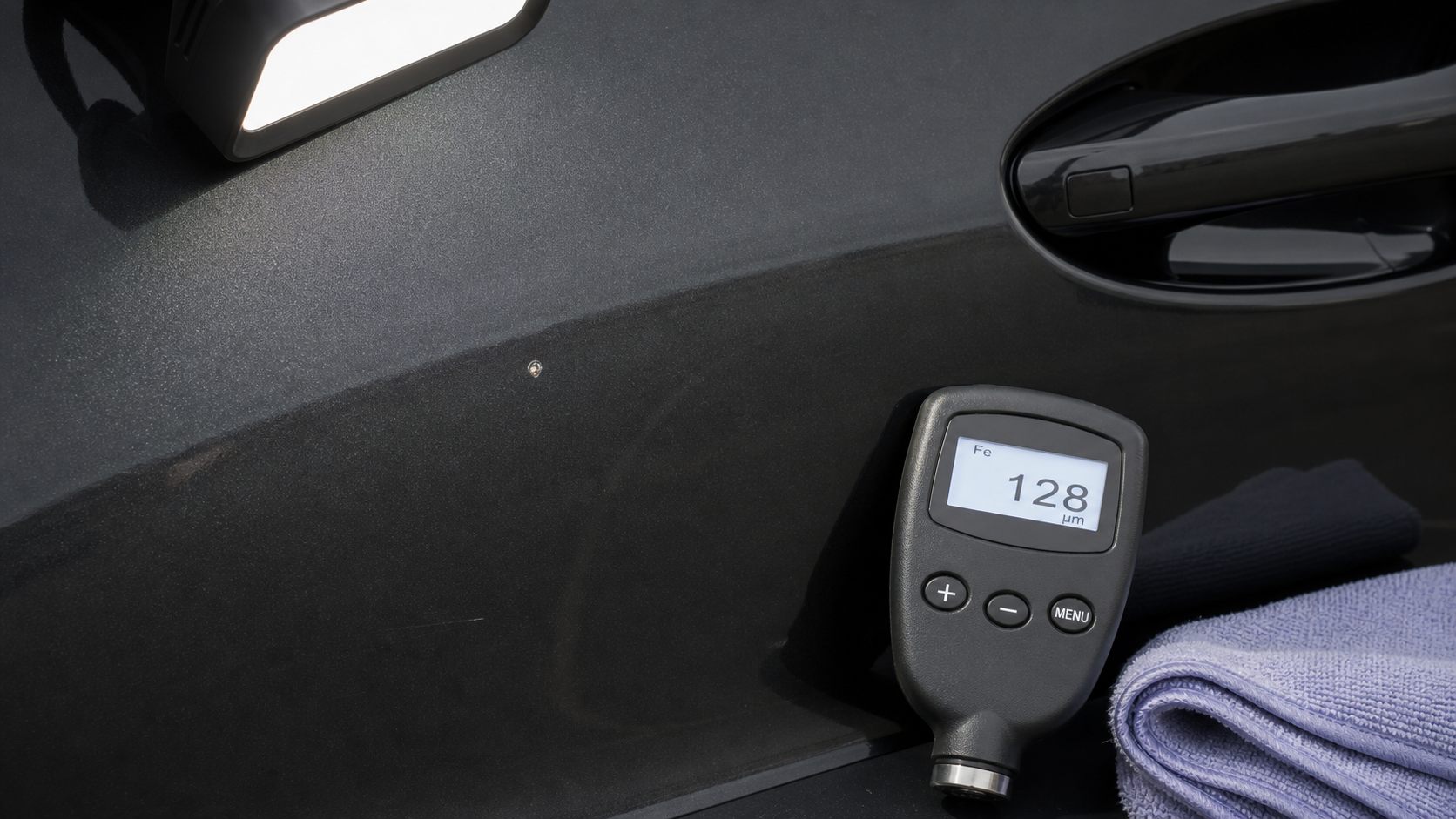
Start with the whole car
Use good natural light if you can. Stand several metres back, then look along each side rather than only straight at the paint. Move your viewing angle and watch how reflections travel from front to rear. Compare one side with the other before getting too close to individual marks; waviness or distortion is often easier to spot at that distance.
Compare panel gaps and alignment
Compare the bonnet, doors and boot or tailgate from side to side. Look for gaps that change width, panels sitting proud or recessed, and doors that don’t sit naturally when closed. Check bumper-to-wing fit, headlamp-to-wing alignment, lower bumper edges and whether the bonnet and tailgate appear centred.
One imperfect panel gap doesn’t automatically prove accident damage. Manufacturing tolerances, adjustment and previous normal maintenance can all affect alignment. It becomes more meaningful when several inconsistencies appear in the same area.
Look at paint colour, texture and reflections
Adjacent panels can show a slight shade difference, especially with metallic paint. Look for a metallic finish that appears to lie differently in daylight, a change in orange-peel texture, lacquer that looks unusually dull or glossy, or reflections that ripple across one panel but not the next.
Don’t panic just because a panel has been painted. Cars have paintwork for all sorts of reasons—scratches, stone chips, vandalism, parking dents, bumper scuffs and cosmetic refurbishment. What matters is what was repaired, how extensive it was and how well the work was done.
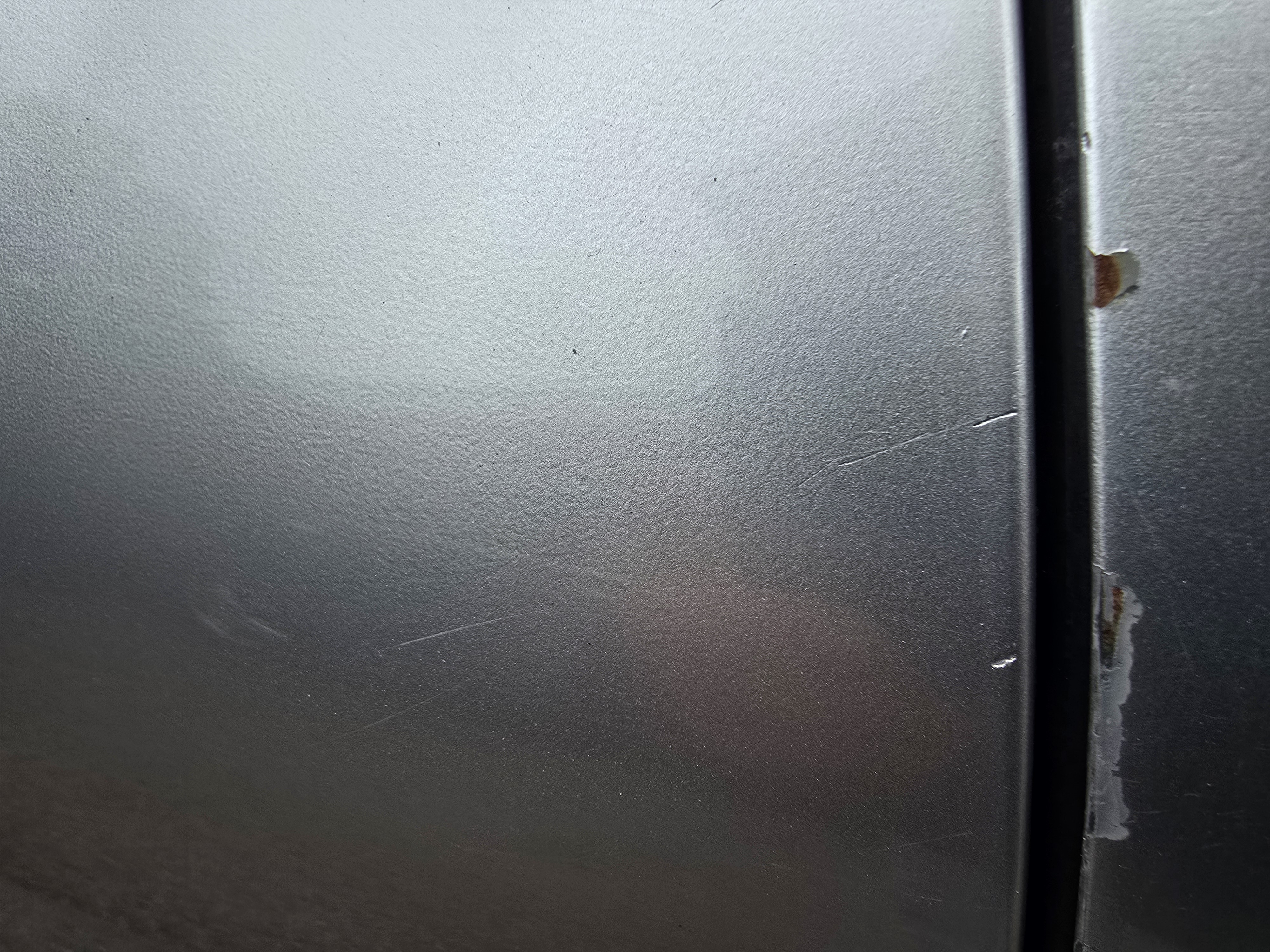
Check for overspray and masking edges
Look carefully around rubber seals, plastic trim, wheel-arch liners, door shuts, handles, lamps, apertures and panel edges. Fine paint mist on a surface that shouldn’t be painted, or a hard masking line, can indicate refinishing. Neat professional repair work may leave few obvious signs.
Fasteners, lamps and glass
Broken factory paint or tool marks on bolts around wings, bonnet hinges or doors can suggest that a panel has been removed or adjusted. That’s a clue, not proof of accident damage: panels also come off for corrosion repair, access or routine replacement.
A replacement lamp or piece of glass can add to the story, but these parts are changed for many innocent reasons. A stone can crack a windscreen and a lamp can fail or suffer minor parking damage. Look for several related clues rather than condemning the car because one date marking differs.
Under the bonnet and in the boot
Without dismantling anything, compare the same accessible area on each side. You may notice disturbed seam sealer, unusual welding, fresh paint beside aged surrounding areas, rippling or distortion, unusual underseal, missing or replaced labels, rough finishing or a structure that looks obviously different from the opposite side. Lift only ordinary removable boot-floor panels where it’s safe and intended.
Poorly finished structural-looking repairs, significant distortion or several connected concerns justify a professional inspection. Don’t crawl underneath an unsecured car or remove safety-related parts.
Judge repair quality, not simply whether paintwork exists
A tidy bumper or wing repair can be entirely acceptable, particularly on an older used car. What affects confidence is poor workmanship: obvious colour mismatch, heavy overspray, sanding marks, sinkage, distorted reflections, badly fitted trim, lifting paint or corrosion beginning around the repair.
Previous paint isn’t a pass-or-fail test. Consider the car’s age, value and asking price, then decide whether the visible quality and the seller’s explanation make sense together.
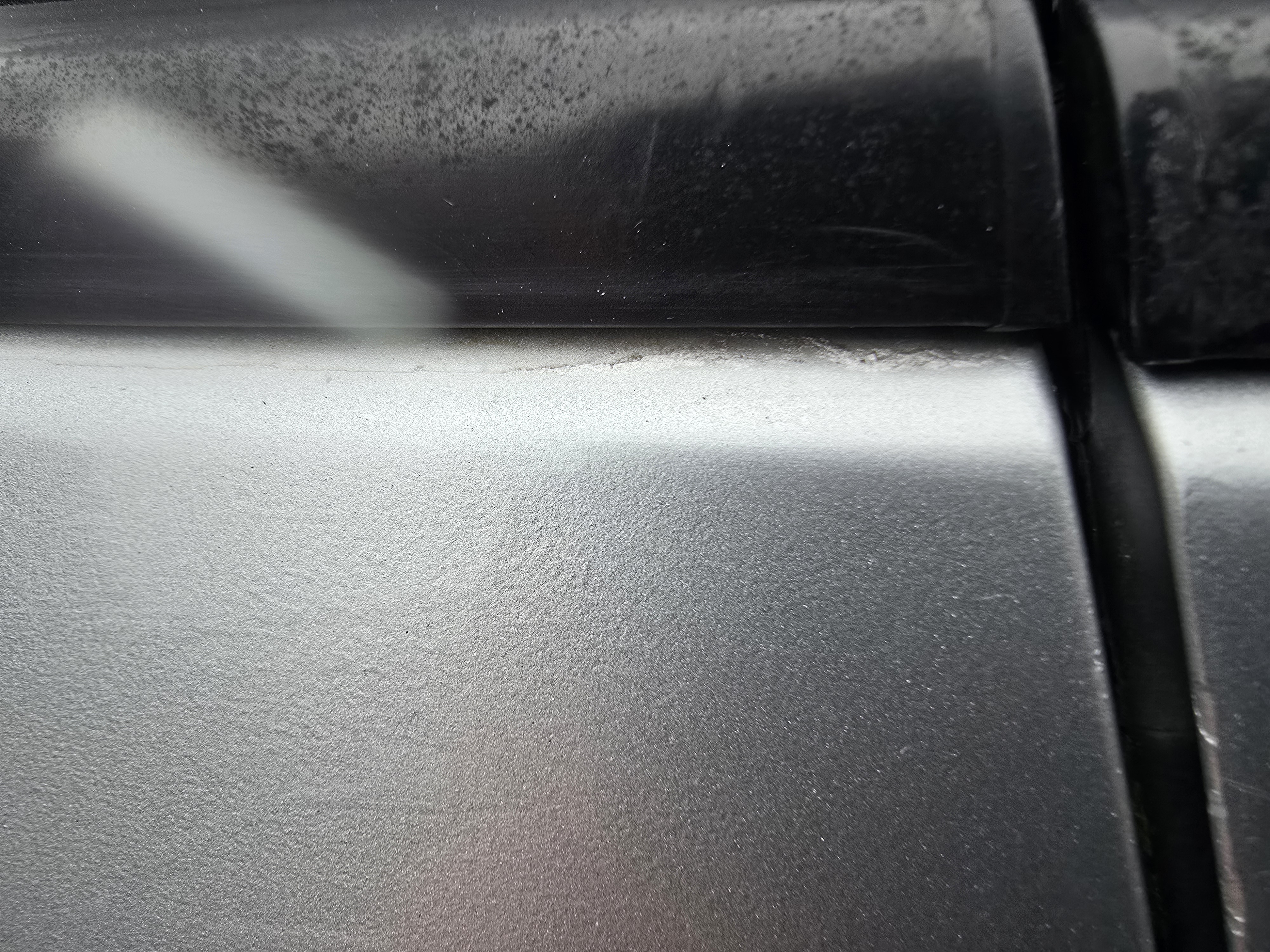
Cosmetic repaint or a tidy local repair wouldn’t normally concern me on its own. Multiple mismatched panels, poor alignment, structural-looking distortion or major repair evidence with no credible explanation deserve a closer look. If the structure or safety systems are in doubt, pay for a professional inspection.
Walk around once from a distance, once looking along the reflections and once close up around edges and fasteners. Three deliberate passes are more useful than hunting randomly for tiny marks.
When to ask for professional help
Arrange an independent inspection if you’re unsure about structure, alignment, welding, airbags or the quality of a substantial repair. A properly repaired car isn’t automatically a poor purchase, but you should understand the extent and quality of the work before deciding whether its condition and price make sense.
Continue with the vehicle history and mileage guide, MOT history guide and used-car test-drive checks.