
Servicing & maintenance
Cambelt vs Timing Chain: What Should a Used-Car Buyer Check?
The belt, chain or wet-belt system sits at the heart of the engine. Identify the exact engine, understand the maintenance it requires and look for evidence rather than relying on a seller’s assumption.
A cambelt, timing chain and wet belt all keep the crankshaft and camshaft movement synchronised. Their construction and maintenance needs differ, but none should be judged from a model badge alone: establish the exact engine, check its manufacturer schedule and verify the history.
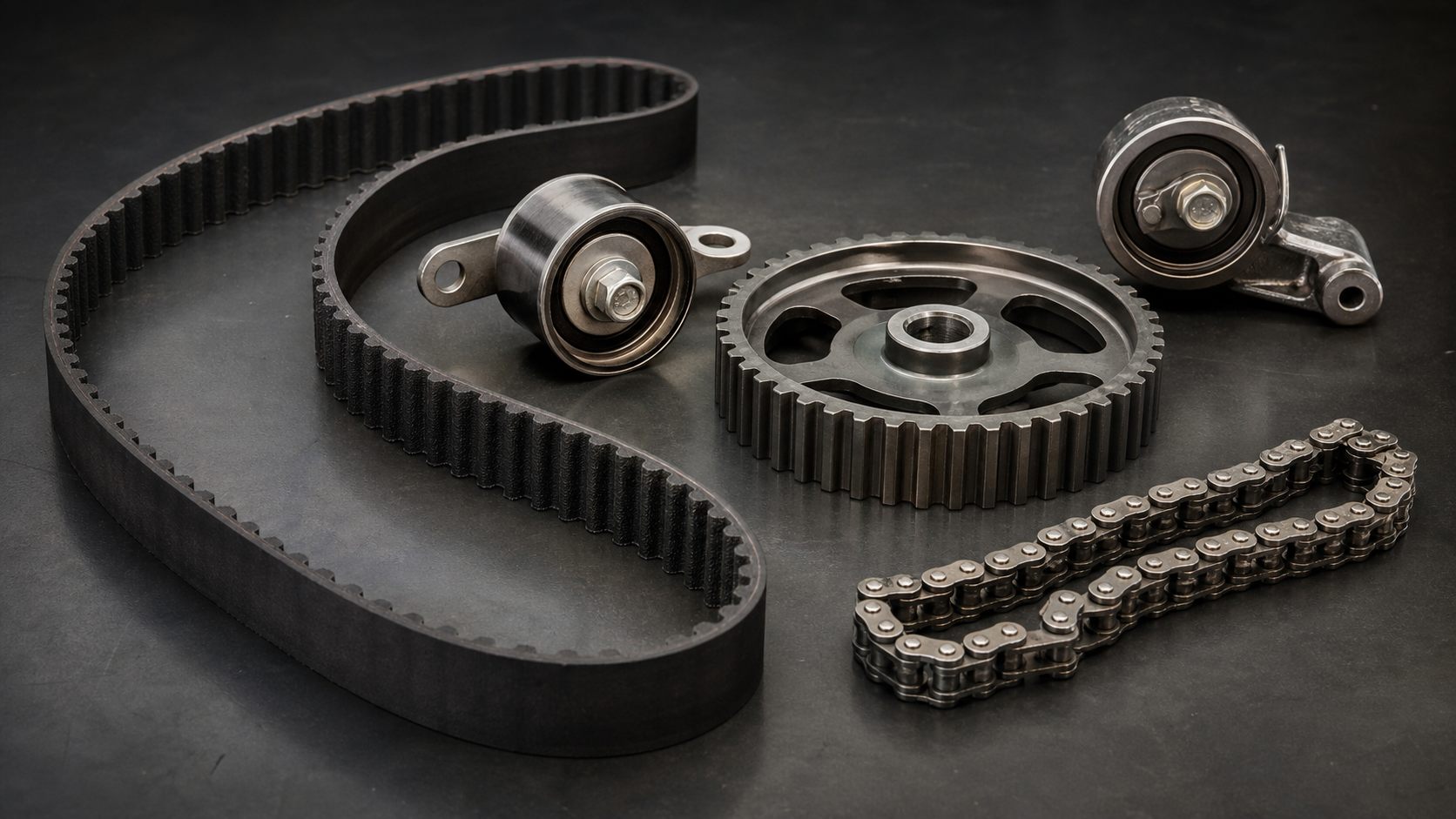
What the timing system actually does
The crankshaft converts the movement of the pistons into rotation. The camshaft, or camshafts, control when the engine’s valves open and close. The timing system links those parts so the valves and pistons move in the correct relationship while the engine is running.
That synchronisation is extremely precise. If it’s lost, an engine may stop, run badly or suffer internal damage. The exact design varies, which is why advice for one engine can’t safely be applied to every car carrying the same model name. Identify the exact engine and its timing system rather than relying on the badge, a seller’s assumption or generic internet advice.
Cambelts and failure risk
A cambelt is a reinforced toothed belt driven by the crankshaft. Its teeth keep the camshaft timing aligned rather than allowing the two shafts to turn independently.
Many engines are interference designs: the valves and pistons occupy some of the same internal space, but at different moments. If the belt breaks or the timing jumps, they can meet. Bent valves, damaged pistons, cylinder-head work or replacement-engine costs can follow. The scale of the risk is why a due or undocumented belt matters in a purchase decision even when the engine currently sounds healthy.
Replacement intervals and evidence
Replacement philosophy varies substantially by manufacturer, engine, model year and market. Some schedules use time, some mileage and many use whichever limit comes first. Don’t rely on a generic interval from an advert, forum post or different version of the same model.
Ask for an invoice identifying the vehicle, date, mileage and work completed. Where relevant, it should also make clear which associated parts were renewed. A sticker or handwritten note can support the story, but documentary evidence is stronger. “The previous owner must have done it” isn’t proof.
A sensible belt job may include tensioners, idlers and other specified hardware; the water pump is often replaced at the same time where it’s driven by, or access is shared with, the timing belt. The correct scope remains engine-specific. An invoice that simply says “belt” may justify asking what was actually renewed.
If I can’t prove a cambelt has been replaced when it should have been, I treat that as a cost and risk still attached to the car. Establish the correct schedule, compare the age and mileage, obtain a realistic quote and factor that uncertainty into the price and timing of the purchase.
Timing chains are longer-life, not automatically lifetime
A timing chain performs the same core synchronising job using metal links, sprockets, guides and a tensioning system. Chains are generally designed for a longer service life than conventional dry belts and many don’t have a routine replacement interval.
“Chain driven” doesn’t mean maintenance-free. Correct oil quality, specification, level and change intervals can be especially important because many tensioners depend on suitable oil pressure and lubrication. Extended oil changes, low oil level, contaminated oil, worn guides or a deteriorating tensioner can contribute to premature trouble.
Warning signs can include an abnormal rattle on cold start, persistent mechanical noise or timing-related fault codes. Those symptoms have other possible causes, so they call for competent diagnosis rather than an automatic chain replacement. Model-specific history still matters: research the exact engine’s known weaknesses and look for service evidence that supports good oil care.
What is a wet belt?
A wet belt is a toothed timing belt designed to run inside the engine in contact with engine oil. Manufacturers adopted the idea for reasons including reduced friction and noise, compact packaging and the wider drive for lower emissions and efficiency.
The exact manufacturer-approved oil specification is particularly important. A lubricant that’s unsuitable for the belt material, neglected servicing or other engine-specific factors can contribute to deterioration. Material released from a degrading belt may circulate in the oil and restrict the pickup or strainer, reducing oil pressure and risking serious engine damage.
That doesn’t make every wet-belt engine inherently unreliable. It makes exact maintenance evidence valuable. Check the current schedule for the precise engine, confirm that the correct oil specification was used and look for credible servicing invoices. Replacement intervals and inspection advice must come from the manufacturer information that applies to that vehicle, not a universal wet-belt rule.
Which is better — cambelt or chain?
Neither system automatically makes a car good or bad. Engine design, correct maintenance and the evidence behind it matter more. A well-maintained belt-driven car with a clear replacement invoice can be a better prospect than a neglected chain-driven car with poor oil history.
Don’t just ask which label sounds safer. Identify the exact engine, understand its requirements and look for a believable record of the work it needs.
Turn the information into a used-car decision
- Identify the exact engine from reliable vehicle information rather than guessing from the badge.
- Confirm whether it uses a conventional belt, chain or wet belt.
- Check the manufacturer’s current time, mileage, inspection and oil requirements for that engine.
- Compare the car’s age and mileage with the relevant schedule.
- Ask for invoices showing the vehicle, dates, mileages and work completed.
- Confirm which associated parts were replaced where relevant, rather than assuming every job has identical scope.
- For chain and wet-belt engines, inspect the service record for the correct oil specification and credible oil-change history.
- Listen for abnormal start-up noise and investigate timing-related warnings or faults properly rather than diagnosing them by sound alone.
- Where proof is absent, allow for the cost and risk instead of assuming the best.
Continue with what full service history really means and the complete Used Car Buying Guide.