
Practical advice · Real experience
What Dealers Really Check When Valuing Your Car
A valuation isn’t one number pulled from a screen. The dealer is building a picture of the actual car, what it’s likely to need and how easily it could be sold afterwards.
Guide prices are a useful starting point, but the car in front of the appraiser matters more. Its condition, history, mileage, specification, tyres, brakes, bodywork, keys and likely preparation costs all help shape the offer.
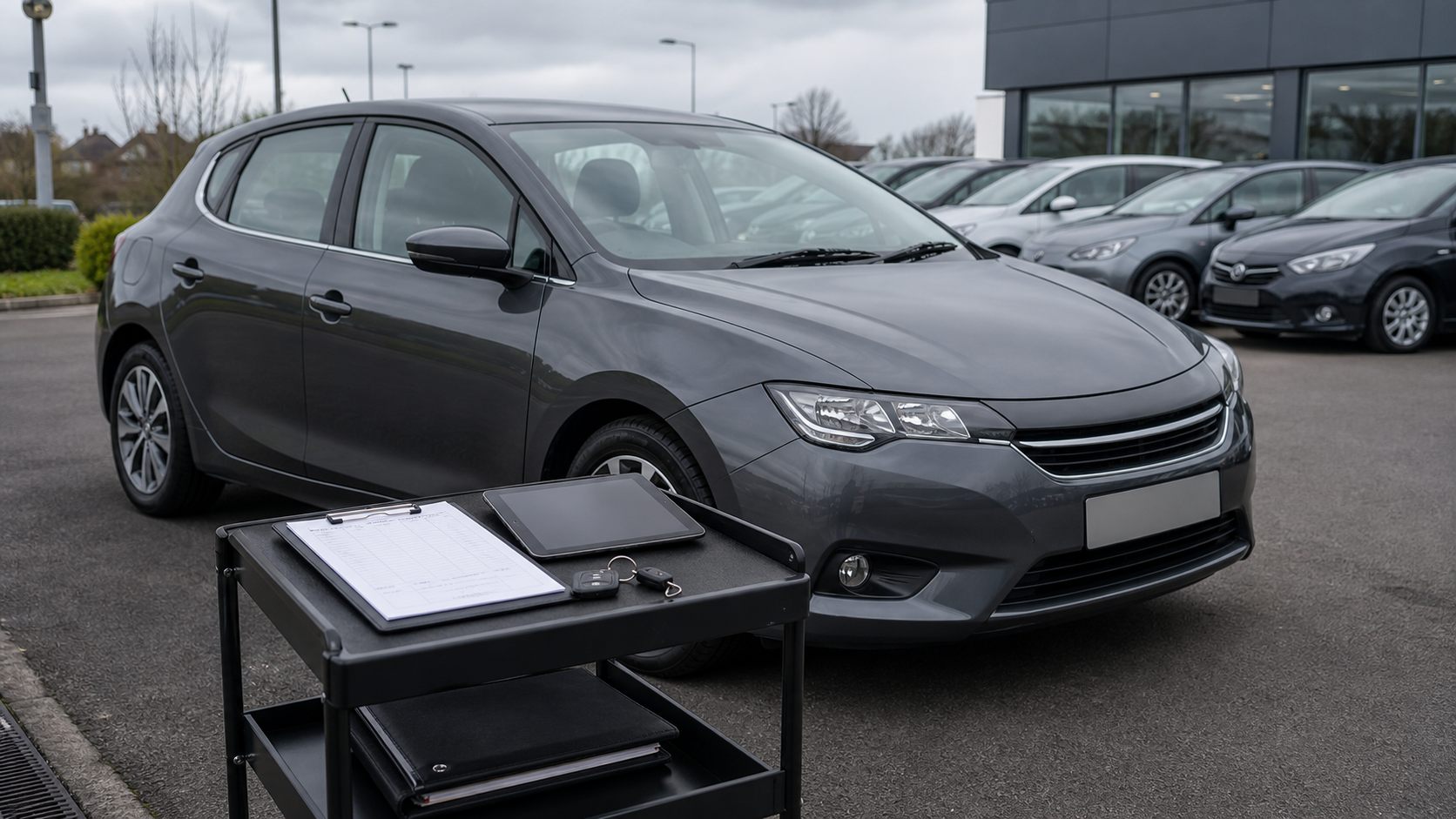
A guide price is only a starting point
Trade guides and live market data are useful, but they don’t know what’s actually sitting in front of you. They can’t see that the car needs two tyres, has damaged wheels, smells of smoke, has a warning light on or comes with an excellent history file.
The person walking around the car may not set the final figure, but their notes and photographs tell the manager what they need to know. A clear picture makes the car much easier to value properly.
Mileage, specification, colour and how desirable that particular model is all matter too. A bright red, blue, yellow or orange car may be exactly what one buyer wants and harder for another dealer to sell; there isn’t a universal colour penalty.
What I’m looking at
When I’m looking at a car, I’m building a picture of it. Paintwork, panel gaps, dents, previous repairs, bumpers, wheels, tyres, brakes, glass, lights, interior condition, warning lights, service history and keys all add to that picture.
Nobody expects every used car to be perfect. The real question is: what’s it going to need before it’s ready to sell? Service records, invoices, MOT history and the way the car has been used help the physical condition make sense. It isn’t about catching the owner out; it’s about making the car’s story add up.
A tyre can be perfectly legal and still need replacing before a dealer is happy to retail the car. Some approved-used schemes work to an internal threshold of around 3mm, which is comfortably above the legal minimum. That’s a preparation cost, not a claim that 3mm is the law.
What’s the car going to need before it can be sold?
If it needs two tyres, a service, brake work, a wheel refurbishment and paintwork, that all comes off what a dealer can realistically pay for it. Glass repairs, warning-light diagnosis, a deep interior clean, odour removal and a missing key can add to the bill as well.
Profit isn’t a dirty word. The dealer still has to buy the car, prepare it, advertise it, provide for warranty work, pay staff and overheads, take the risk and leave a margin when it eventually sells.
Some cars fit the dealer’s stock perfectly and they’ll want to retail them. Others might be too old, too high-mileage, slower to sell or simply wrong for that dealership, so they may be sold on to another trader instead. That doesn’t automatically make them bad cars.
Dealers don’t just look at the profit on one car. They also care how quickly they can sell it and get the money back to buy the next one. In the right circumstances, making around £750 twice in a month can make more sense than waiting much longer to make £1,000 once.
Why two dealers can offer different figures
Two dealers can look at the same car and come up with different figures without either of them being dishonest. One may already have several similar cars; another may have customers waiting for that model. One may be able to prepare it more cheaply, want to retail it or know it will sell quickly, while the other expects to pass it on.
Finance is a separate part of the calculation. If you owe £12,000 and the car is worth £10,000, that doesn’t make the car worth £12,000. It means there’s £2,000 of negative equity to deal with in the next agreement. Keep the car’s value and the finance settlement separate when comparing offers.
Prepare the car, then compare the whole deal
You don’t need to spend hundreds getting a part-exchange ready. Turn up with it reasonably clean, remove rubbish and personal belongings, bring both keys and organise the service history and invoices. Pet hair, smoke smells and a heavily soiled cabin can make the work ahead look worse; an honest, presentable car is simply easier to assess.
A full valet doesn’t magically add hundreds of pounds to the value. It just helps the appraiser see the car properly and avoids needless doubts about its condition.
Don’t get hung up on one big part-exchange number. Look at the replacement car’s price, any discount, the finance settlement, deposit, finance structure and what it actually costs you to change cars. A larger allowance can easily be offset by a higher price or less movement elsewhere.