
Practical advice · Real experience
Visiting a Car Dealership
Once you understand what’s happening, a dealership visit becomes much less intimidating. It normally follows a recognisable sequence, and knowing why each stage happens helps you stay comfortable, ask better questions and make a clearer decision.
A dealership visit normally follows a recognisable process: understanding what you need, appraising any part exchange, demonstrating and test-driving the car, presenting the figures and recording an agreement. Understanding the process makes it much less intimidating.

Understand the process first
Many established dealerships use a recognisable journey, sometimes called the road to the sale. It helps them establish what car you need, how you’ll use it, your likely mileage and equipment requirements, whether there’s a part exchange or outstanding finance, your budget and deposit, whether funding is relevant, when you need to change and whether the particular car you’re viewing genuinely fits.
Those questions can sound like unrelated pieces of sales technique when nobody explains the logic. In reality, a well-run used-car transaction has several moving parts, and a structured process helps both sides deal with them in a sensible order.
The process itself isn’t automatically sinister. Done badly, it can feel robotic or pressurised. Done well, it prevents wasted time, exposes a poor match early and helps both sides reach a decision they understand.
Before you arrive
Confirm that the actual car is still available before travelling, especially if you’re making a meaningful journey. Before you go, read the advert properly, compare the asking price with genuinely similar cars, check the MOT history, understand the service-history claim and identify the major maintenance items and specification that matter on that exact model.
Make a short list of questions rather than trying to remember everything while you’re standing beside a car you like. If a test drive may be needed, take your driving licence. If finance or payment is relevant, have a realistic view of your deposit, likely monthly budget and the process you’re willing to consider. You aren’t there to interrogate anybody. Just arrive prepared enough that excitement doesn’t make every decision for you.
A booked appointment and a walk-in can both work. An appointment is sensible when you’re travelling, want the car accessible or hope to arrange a test drive; it gives the dealer time to prepare. Walking in is perfectly normal too, but the car, staff or test-drive availability may be less predictable.
Some dealerships send a personalised video. Used properly, it shows that somebody has physically engaged with your enquiry, lets you see the actual vehicle rather than generic photographs and gives you a chance to ask specific questions before setting off. It isn’t a substitute for inspecting the car, but it can remove avoidable surprises.
First impressions: useful signals, not theatre
Look for the basics: does the dealership seem organised, are you acknowledged, is the car where you expected it to be, and do answers remain clear and consistent without unexplained pressure? Those things tell you more than a sales script.
Don’t overread the superficial signals. A modest independent can be excellent, while a polished reception, expensive coffee or a striking showroom doesn’t prove that an individual used car is right. The car, its story and the way questions are handled still matter most.
The meet and greet
A professional opening should feel friendly, calm and organised. The salesperson introduces themselves, establishes which customer and vehicle enquiry they’re dealing with, and offers somewhere appropriate to talk.
Some people want to see the car first; others would rather explain what they need before walking outside. A good salesperson can establish that without immediately overwhelming you with finance or products, while keeping the visit focused on why you came.
Basic contact details may be recorded so the enquiry can be managed. That’s normal in a structured dealership process, but you should still feel that you’re having a conversation rather than being processed.
Qualification—the questions salespeople ask
Qualification simply means understanding what the next car needs to do. A salesperson may ask about your current car, what you like or dislike about it, intended use, passengers and luggage, annual mileage, how long you normally keep a car, budget, deposit, preferred monthly spend where finance is relevant, part exchange, outstanding finance, must-have equipment and purchase timescale.
Customers sometimes become defensive because they assume every question is designed to extract more money. In reality, withholding the basics can make it harder to structure a useful proposal. If you cover 25,000 miles a year, a low-mileage agreement with unsuitable terms won’t help. If you need a large boot, there’s little point spending an hour on a car that can’t carry what you use every day.
Significant outstanding finance or negative equity may materially affect what’s possible and is better understood early. A genuine fixed overall budget should also guide which cars are being discussed rather than appear only after the wrong car has been demonstrated.
You don’t need to disclose anything you’re uncomfortable sharing, and it’s reasonable to ask why a question matters. Useful answers should lead to a more relevant recommendation, not pressure. A good salesperson will recap what they’ve heard instead of filling gaps with assumptions.
Part-exchange appraisal
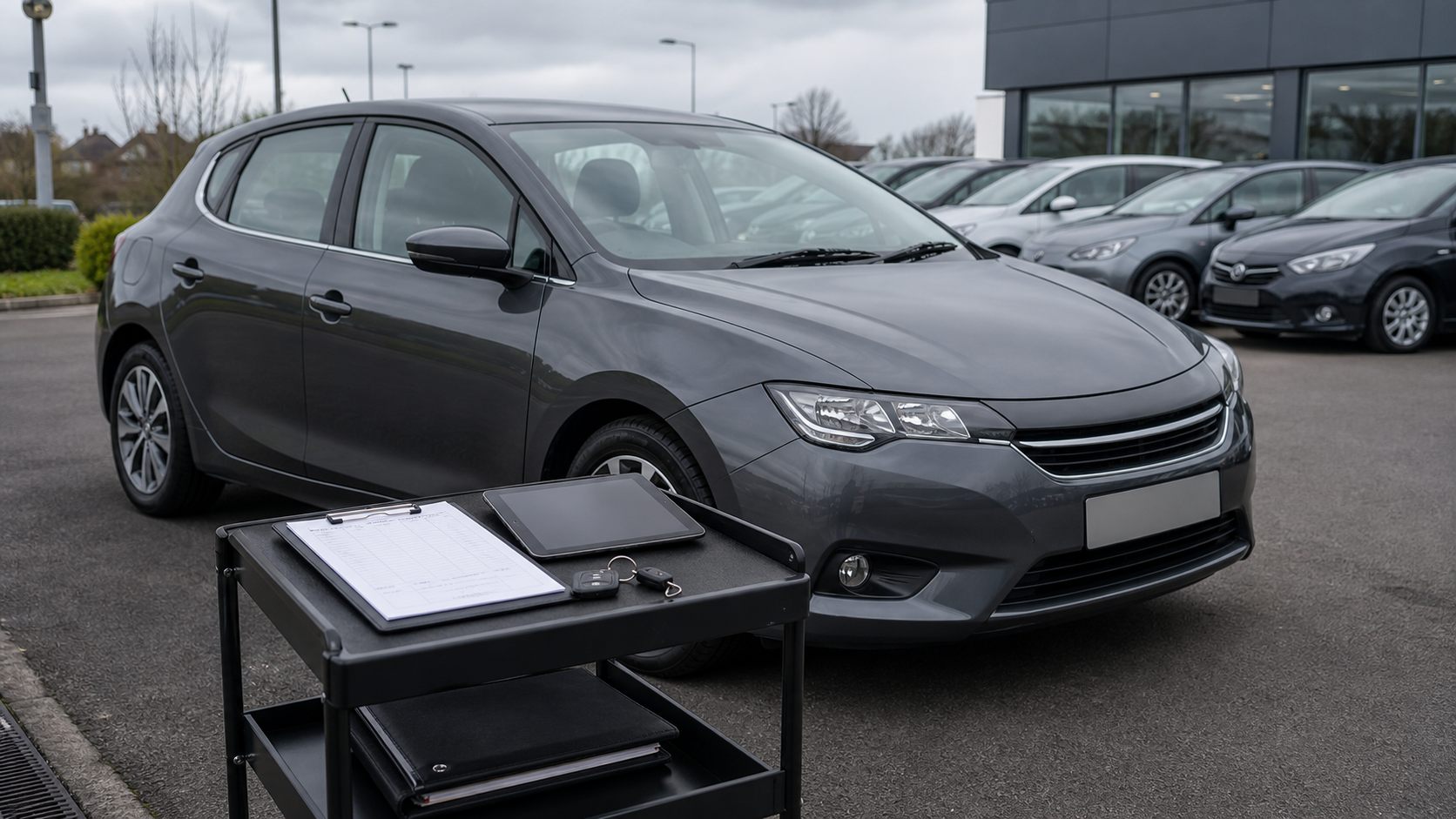
You’re looking to buy the dealer’s car, but the dealer is simultaneously deciding whether to buy yours. That second transaction is why a proper appraisal matters; registration, mileage and an online valuation are only the starting point.
The inspection should consider identity and provenance, mileage, MOT and history, service evidence, the agreed number of keys, tyres, wheels, glass, bodywork, interior, warning lights, odours, obvious mechanical issues, general drivability and whether the car is likely to become retail stock or trade stock.
Actual condition creates preparation cost and risk. A car that looks broadly similar in a valuation guide can be a very different commercial proposition once worn tyres, smoke smell, damaged wheels, uncertain history or a warning light enter the picture.
What happens behind the scenes
While you inspect or test-drive the replacement car, the salesperson may pass the information already gathered to a sales manager, used-car manager, buyer or another relevant decision-maker. The job titles and systems vary, but the commercial task is broadly similar.
That information may include your requirements, budget and deposit, part-exchange details, appraisal observations, outstanding finance, likely funding route and other context that affects the transaction. The manager can then consider live market values, whether the part exchange belongs in retail or trade stock, likely preparation and risk, and the overall commercial position before building the figures.
This is why appraisal commonly happens before the test drive. Done properly, the work progresses in parallel and you return from the drive with the dealership further forward rather than only then beginning to inspect your car. Not every dealership follows an identical workflow, but the practical logic remains.
The valuing manager may rely partly on the person who has physically seen and driven your car. “Genuinely clean, good history, sensible tyres, drives properly and should retail well” creates a different level of confidence from “dirty interior, smoke smell, poor tyres, warning light, damage and uncertain history”.
That doesn’t mean a salesperson can simply talk the valuation up by hundreds of pounds, and good presentation doesn’t manufacture value. What it can do is remove avoidable reasons to deduct from an otherwise sensible car.
Static demonstration
A good demonstration isn’t a feature dump. It connects a small number of useful features to needs discovered earlier: rear access, space and storage if you carry children; relevant capacity if you tow or carry equipment; cameras and sensors if parking is difficult; or seat comfort, adaptive cruise and assistance features if you travel long distances.
Three or four relevant explanations usually teach more than every button and acronym. This is why qualification comes before demonstration: the salesperson should know which features solve your problems rather than showing whatever happens to be easiest.
If an important function hasn’t been shown, ask. The demonstration should be about your priorities, not a recital of the brochure.
The test drive
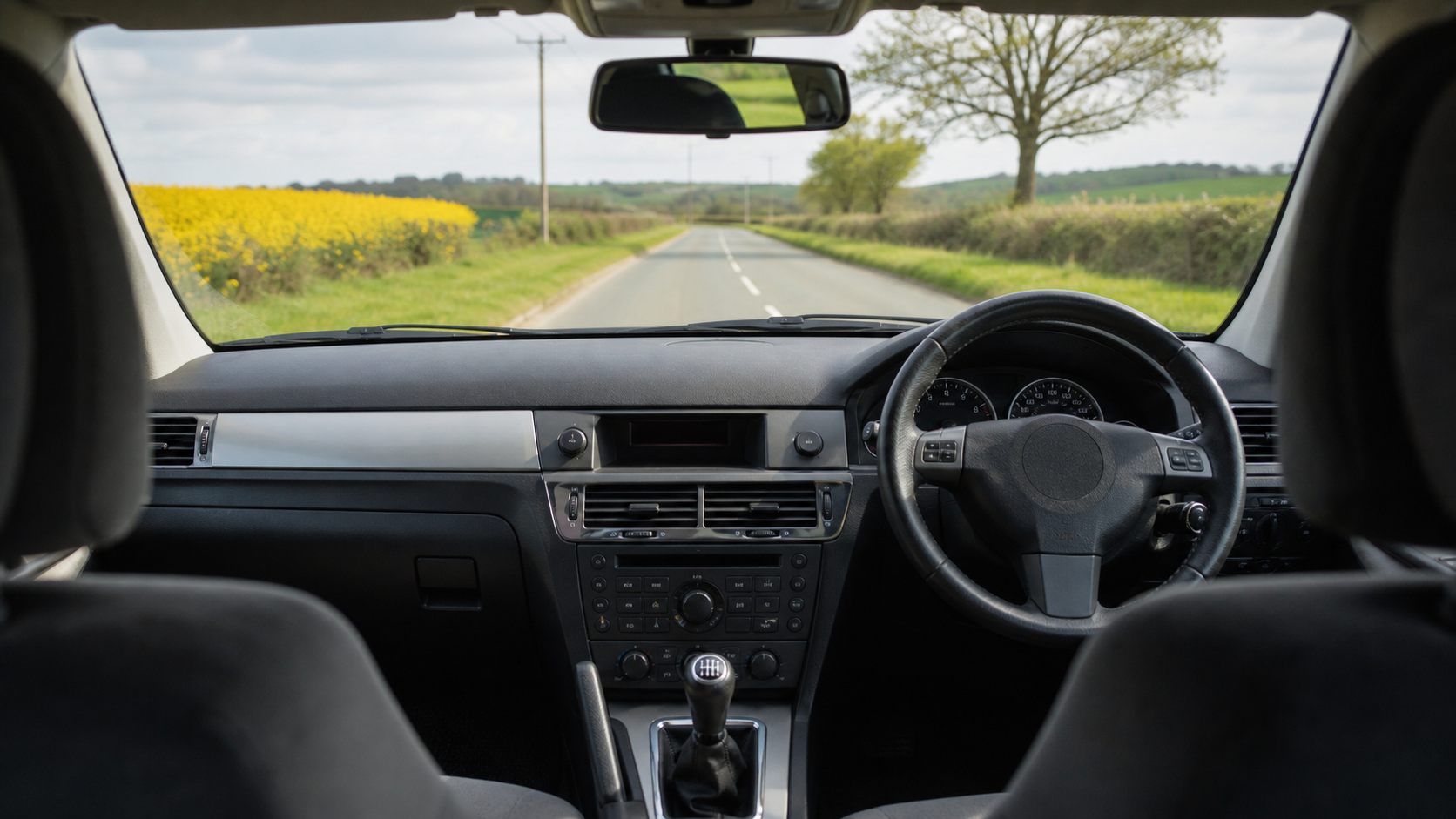
Licence and insurance checks are normal safeguards on a valuable vehicle. Before setting off, confirm the dealership’s licence and insurance requirements, the likely route and how long the drive can be. A salesperson may accompany the drive because the car belongs to the dealership, unfamiliar controls may need explaining and questions naturally arise on the road. You should still have enough mental space to form your own opinion.
The route should give you enough variety to decide whether the car suits you. Depending on the dealership’s location and your likely use, that may mean urban driving, slower manoeuvring, a faster road, reasonable acceleration and braking, parking and enough time to assess noise, comfort and controls. There’s no useful universal route or duration; it should suit the car and customer.
Assess clutch and gearbox behaviour, steering, brakes, suspension, warning lights, engine response, unusual noise, visibility, driving position and whether you actually like the car. Ten minutes around an industrial estate tells a motorway driver very little, while a long high-speed route may add nothing for somebody buying a small local runabout. Excitement about buying shouldn’t replace a basic assessment.
Returning from the test drive
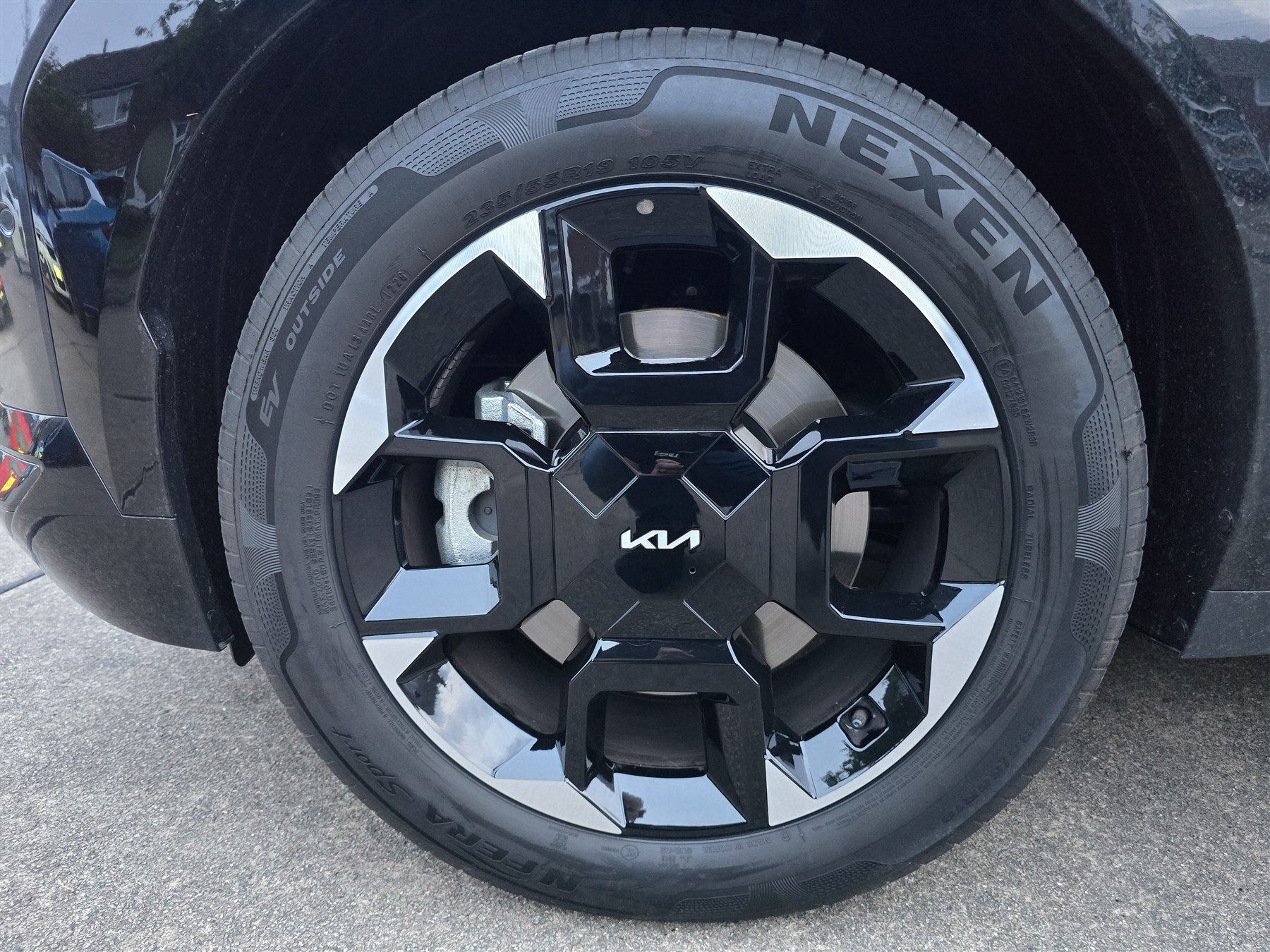
If you drove the actual used car, look at it again in reasonable light. Once you know you may genuinely want it, this is the right moment to raise condition points that materially affect your decision.
Keep age, mileage, value and vehicle type in perspective. Stone chips, light scuffs and ordinary wear may be entirely reasonable on an older car; that doesn’t mean the whole vehicle deserves refurbishment. A badly damaged wheel, tyre approaching replacement, notable body or windscreen damage, broken trim, an unusual noise or warning light is more significant.
Don’t assume every mark will automatically be repaired or build an unrealistic list. Discuss what matters, understand the preparation standard and get any agreed item recorded clearly.
Look at the car before talking numbers
If the car itself isn’t right, there’s little point negotiating the deal. Inspect the exterior, tyres and wheels, interior, keys, specification and available history before you let the conversation drift into monthly payments or allowances. Ask what preparation has already been completed and raise faults or cosmetic issues that genuinely matter to you.
Dealer preparation isn’t the same as perfection. The standard should reflect the car’s age, mileage, value, dealer type and asking price: an older £3,000 car and a £40,000 approved-used car shouldn’t be judged to the same cosmetic standard. Honest representation still matters at every level.
History, paint and previous damage
Ask practical questions about service records, invoices or digital history; major maintenance such as a timing belt, wet belt or timing-chain work where relevant; MOT advisories; recent tyres or brakes; the number of keys; and any category status. You aren’t trying to complete a courtroom cross-examination. You’re checking whether the answers make sense together.
Previous paint isn’t automatically a red flag. If you can see or are told about a repair, ask what happened, whether it was cosmetic or structural, whether the quality is acceptable and whether the price fairly reflects the car. Expecting every used car to retain factory paint throughout is unrealistic; a concealed history or an explanation that doesn’t add up is the concern.
“Figures aside, is this the car for you?”
A salesperson may ask this before spending time structuring figures. It’s a closing question, but it also establishes whether you actually want this particular car before anybody tries to solve the financial side.
A genuine no should trigger another conversation, not an argument. Perhaps the car is too noisy, uncomfortable, the wrong size, missing important equipment, has unsuitable performance or simply gives you the wrong driving position.
If the car itself is wrong, manipulating the monthly payment doesn’t make it right. Saying yes to the car also doesn’t commit you to unsuitable figures; it simply allows both sides to move to the next question.
The offer
A proposal may be called an offer sheet, deal presenter or four-square. Alongside the car and figures, a dealership may offer finance, warranty extensions where relevant, cosmetic or wheel-and-tyre products, paint or interior protection and other products.
Those products aren’t automatically good or bad. Ask what each one costs, exactly what it covers, what’s excluded, how long it lasts and whether it’s relevant to how you’ll use this particular car. A professional dealership should explain the product and allow you to decide.
If you want to pay outright or arrange funding elsewhere, that’s completely valid. There’s also no harm in comparing the dealership’s finance where it’s relevant, provided the structure and total commitment are clear and the choice remains yours.
How the numbers actually work
Read the deal in a fixed order: replacement-car price, part-exchange allowance, outstanding-finance settlement, customer deposit and balance to change. If funding is involved, then look separately at the amount financed, term, interest or APR where applicable, monthly payment, any balloon or final payment, mileage and return conditions where relevant, fees, early-settlement position and total amount payable.
Don’t judge the transaction from one headline number. A generous-looking part-exchange allowance can sit beside a higher replacement-car price; a larger discount can coexist with a weaker allowance. Keep every line visible and ask for anything unclear to be slowed down and explained.
Compare the complete deal and cost to change. The best result isn’t simply the biggest discount or the lowest monthly payment; it’s the right car at a fair market price, with a fair allowance and funding or products that genuinely suit you.
- 1Vehicle price
- Start with the agreed price of the car you’re buying.
- 2Part exchange
- Subtract the allowance for your current car.
- 3Finance settlement
- Add any outstanding balance that must be cleared.
- 4Cash deposit
- Subtract any additional money you’re putting in.
- 5Balance to change
- This is the amount left to pay or fund.
If you’re financing it: compare the term, interest rate, mileage or return conditions where relevant, and total amount payable—not only the monthly figure.
What sits between buying and retailing a car
It’s easy to assume that advertised retail price minus purchase or part-exchange price equals dealer profit. That isn’t how retail motor-trade economics work.
Between acquisition and sale can sit mechanical preparation, service and MOT work, tyres and brakes, bodywork, wheel refurbishment, valeting, diagnostics, warranty exposure, stocking or funding cost, advertising, administration, staff, premises and commercial risk. Not every car needs every item, and there’s no honest universal margin percentage.
In many dealer groups, workshop, bodyshop and other departments have their own budgets, targets, labour structures and overheads. Work carried out inside the same organisation therefore isn’t necessarily free to the used-car operation. Structures vary; the point is consumer understanding, not automatic justification of any particular offer.
Negotiation: focus on what is real
Many used cars are now priced against live market evidence and stock-age policies, so the old expectation of a large automatic discount often doesn’t match the market. A useful negotiation is calm and evidenced: a genuine defect, agreed preparation, service or MOT work, tyres, brakes, wheel repair, a missing key or a price where there’s genuine room.
There’s no need for theatrical haggling. If a point matters, explain why and listen to the answer. The useful aim is a car and a deal that make sense, not a victory over the person across the desk.
When the price does not move
A dealer may genuinely have little or no room in the advertised price, particularly if the car has already been reduced or is aligned tightly with comparable stock. That doesn’t automatically mean the salesperson is being difficult.
Ask whether a service or MOT is due, whether agreed preparation can be included, or whether an outstanding condition point can be resolved before collection. Don’t assume something must always be “thrown in”; make sure that anything agreed is useful and recorded.
Closing techniques—explained, not feared
Normal closing language might ask, “If we can get the figures where you need them, are you happy to proceed?”, offer two relevant choices or ask whether anything is preventing a decision. These are structured ways of finding out whether you want to move forward, not evidence of wrongdoing.
Concern is more justified where figures remain unexplained, products appear unexpectedly, promises won’t be recorded, you’re pressed to sign without understanding or somebody claims a decision must be immediate when that isn’t genuinely the case.
When the earlier stages have been handled properly, a close should feel natural. You’re still free to pause, ask another question, negotiate or say you’re not ready.
Agreeing the deal
Once you want the car and the figures are agreed, a deposit may be taken, an order or agreement completed and any relevant finance process carried out. Read the documents and make sure they match the transaction you believe you’ve made.
Record every agreed preparation or remedial item precisely. That might include wheel refurbishment, a cosmetic repair, damaged trim, a tyre, investigation of a noise, servicing or MOT work, or another specific condition point.
If it mattered enough to influence your purchase and the dealer agreed to do it, get it written down. Don’t rely on somebody remembering a conversation several days later.
Don’t rush same-day collection
If normal preparation or agreed work is still outstanding, I’d usually rather leave the agreed deposit, give the dealership time to complete the job properly and arrange collection for a suitable later day.
Driving away immediately isn’t the measure of a good deal. A proper preparation job and planned handover are more valuable than rushing simply to complete the transaction that afternoon, especially where cosmetic or remedial work has been agreed.
Getting ready for collection
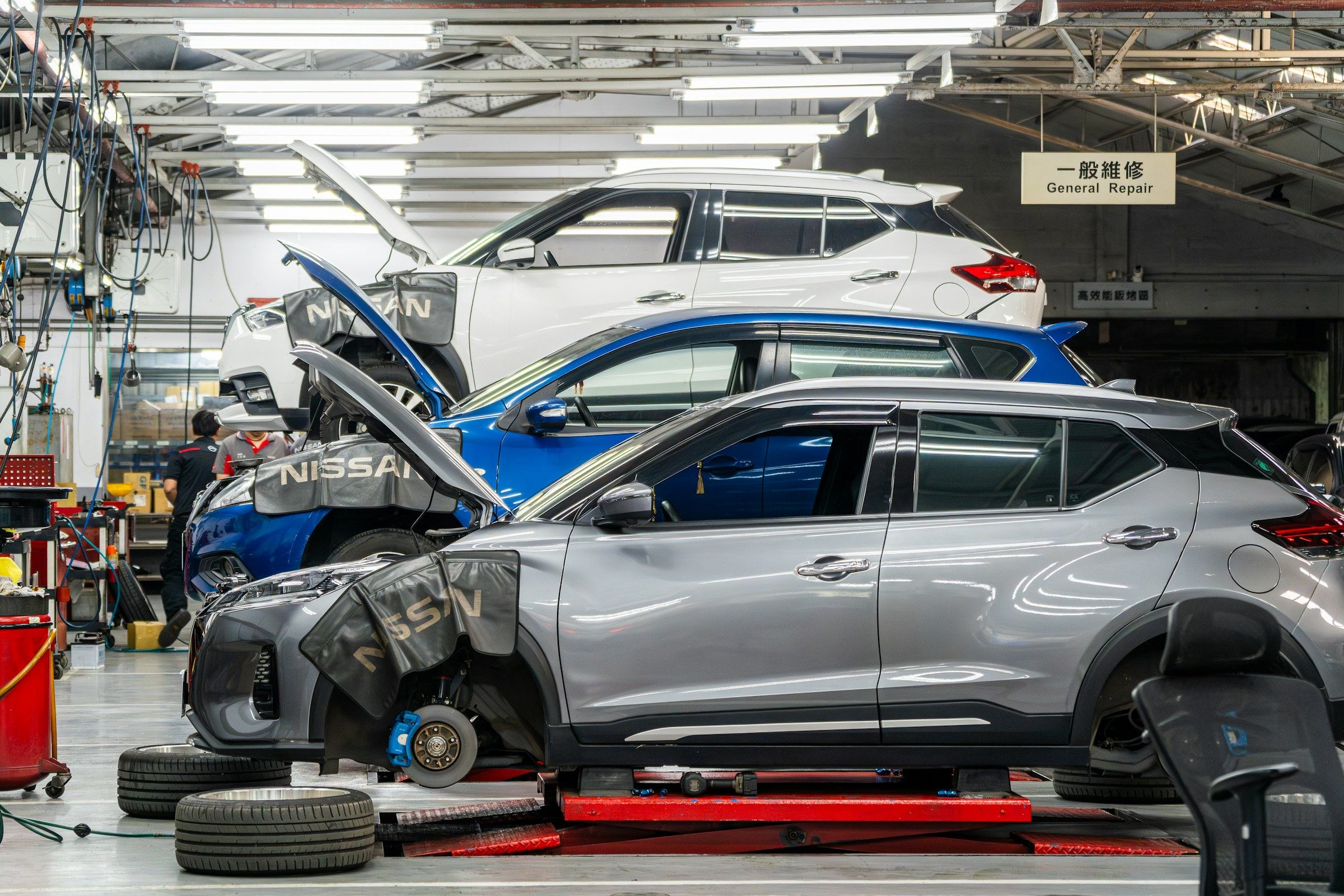
Between order and handover, the car may need valeting, servicing, an MOT, workshop inspection, agreed mechanical work, cosmetic preparation, wheel work and paperwork or finance administration. The sequence and timescale will vary with the vehicle and dealership.
The salesperson should explain what’s needed from you, set a realistic appointment and keep you informed if the timing changes materially. If you’re travelling a significant distance, confirm the collection appointment and completion of important agreed work before setting off.
Collection should feel planned, not improvised. Giving the preparation team enough time is usually better than arriving to discover the car or documents aren’t ready.
Handover day

Inspect the vehicle again before becoming buried in paperwork. You aren’t repeating the whole buying inspection; you’re confirming it’s the agreed car, its overall condition remains as expected, the recorded preparation has been completed and no new damage has appeared.
Check the windscreen and other glass before driving away. This is a practical precaution, not an accusation: once the car has travelled on public roads, it can be extremely difficult to establish whether a chip existed at handover or happened afterwards.
Confirm that the number of keys advertised or agreed is physically present. Not every used car has two keys, but a missing modern key can be expensive, so establish what was promised before leaving.
Final-payment methods differ between businesses. Ask what the dealership requires in advance and make sure the necessary funds or arrangements are ready; don’t assume every dealer accepts the same card, cash or transfer methods.
You should also understand the supplied warranty and where its details are, confirm the keeper change has been completed using the appropriate DVLA process, and know what confirmation or new-keeper documentation you have. Vehicle tax doesn’t transfer with a used car, so arrange the required tax before driving away where applicable. Appropriate insurance must already be in place; if temporary cover is offered, understand exactly what has been provided.
If something is wrong at collection
If recorded work is incomplete or there’s new damage, address it before driving away where possible. Excitement or embarrassment shouldn’t prevent a reasonable conversation about a point that matters.
A practical solution may be an immediate correction, a documented follow-up or a rearranged collection day. Make sure everybody is clear on the position before the handover becomes harder to unwind.
Controls and technology
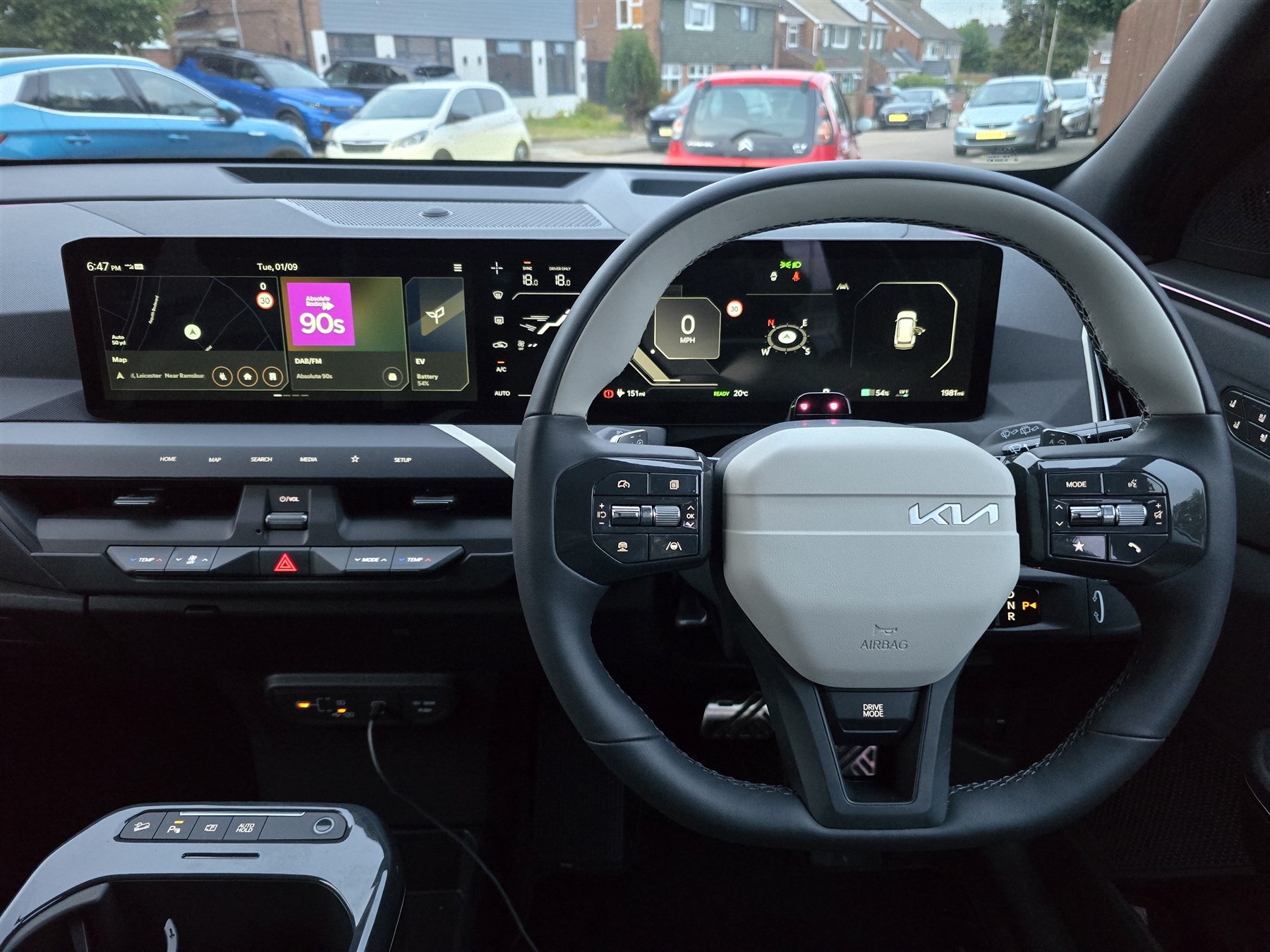
A proper handover should cover the functions you genuinely need before leaving. Depending on the car, that may include pairing a phone, navigation basics, cameras or sensors, important assistance settings, the electronic handbrake, drive modes, charging for an EV or plug-in hybrid, fuel or charging-flap release, keyless functions or a tyre-pressure reset.
The list isn’t exhaustive and you don’t need to memorise every menu. Ask about the functions that matter to your use, and deal with the safety-critical or journey-critical basics while somebody familiar with the car is beside you.
Drive away
The best drive-away moment is uneventful: agreed work, keys, payment, keeper paperwork, tax, insurance and the essential controls are sorted, and you can enjoy the car. Take one last look around rather than trying to solve an avoidable problem at the roadside.
A good process should leave you informed and excited, not merely relieved that the purchase is over.
Once you’ve got the car home
A manufacturer or dealer survey and a request for a review may follow. Specific feedback about what was done well is more useful to staff and future customers than a two-word rating.
A good dealership remains available after collection, and follow-up should feel helpful rather than solely concerned with chasing a score. Keep the order, preparation promises, handover paperwork and warranty information somewhere accessible.
If there’s a problem after the sale
A fault after collection doesn’t by itself prove that the dealership was dishonest or knowingly mis-sold the car. Cars can develop faults, including after a careful preparation process.
What matters greatly is how the dealership responds: its communication, attitude, investigation, timescale and genuine attempt to resolve the matter. Explain what happened clearly and give the business a fair opportunity to investigate.
That balanced view doesn’t weaken legitimate consumer protections. Where a legal or regulatory issue affects your individual position, check current official or professional guidance rather than relying on guesses or showroom folklore.
What a good dealership experience looks like
The customer should leave feeling listened to, understanding the car and the figures, knowing what was agreed and comfortable with the decision. The salesperson and dealership should understand the requirement, have appraised the part exchange properly, presented appropriate options, reached a clear commercial agreement and made the next steps obvious.
The best outcome isn’t one side “beating” the other. It’s a transparent transaction that both sides understand: structured without feeling robotic, commercial without becoming confrontational, and professional without losing the human element.
The Forecourt Insider dealership visit checklist
Before the visit: know the car, its history, likely value and the questions that matter to you. At the car: inspect it before you talk yourself into the deal. On the drive: make sure it actually feels right.
On the numbers: understand the price, part exchange, finance and complete cost to change. Before the deposit: record every agreed remedial job. At collection: inspect again, check the glass, keys, paperwork, tax, insurance and warranty.
You aren’t trying to “beat the dealer”. You just want to leave with the car and deal you actually agreed to.